Why GRR's Sensory Room Proves Digital Engagement Belongs in Every Waiting Area
June 22, 2026
Learn More




Most hospital administrators are looking at the wrong clock.
They track "door-to-doc" times and "length of stay" with surgical precision. They believe that if they can just shave three minutes off the intake process, their patient satisfaction scores will climb.
But the data tells a different story. In the world of HCAHPS (Hospital Consumer Assessment of Healthcare Providers and Systems) and CMS reimbursement, the actual minutes on the stopwatch matter significantly less than the "mental minutes" experienced by the patient.
Hospitals are losing millions in value-based reimbursement because of how patients feel while sitting in a plastic chair.
HCAHPS doesn't actually have a single question that asks: "How many minutes did you wait in the lobby?"
Instead, it asks about the Responsiveness of Hospital Staff. It asks if patients got help "as soon as they wanted." It asks if doctors and nurses communicated effectively.
The problem? A patient who feels ignored for 20 minutes will rate your "responsiveness" poorly, even if your clinical outcomes are world-class. According to a study published in Family Medicine, patients generally expect a 20-minute wait, but once that threshold is crossed without engagement, satisfaction scores plummet.
This isn't just a "customer service" issue. For hospitals under the CMS Hospital Value-Based Purchasing (HVBP) program, these scores directly dictate how much of their 2% DRG withhold they get back. Unmanaged waiting is a direct tax on your bottom line.
For decades, the "solution" to waiting was to bolt a TV to the wall, set it to a news cycle or a home improvement channel, and hope for the best.
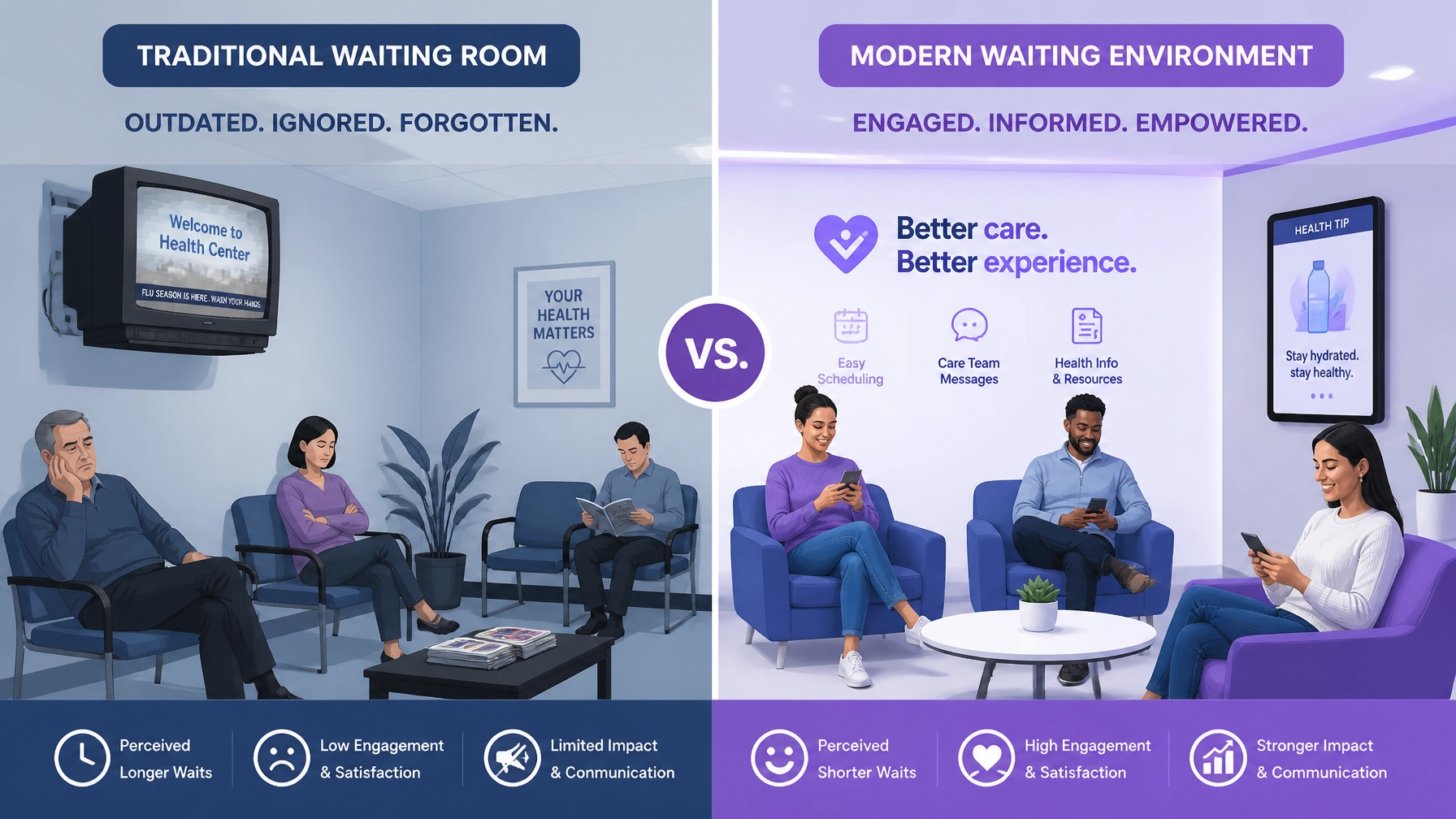
This traditional approach is failing for three specific reasons:
When a patient is left to stare at a TV they didn't choose, their brain defaults to "waiting mode." In this state, time dilates. Ten minutes feels like thirty. By the time they see a provider, they are already frustrated, making them less likely to provide a "Top Box" HCAHPS score.
The most significant shift in patient behavior over the last decade is the desire for autonomy. Patients no longer want to be "processed." They want to be engaged.
Modern patients are already using their phones to distract themselves. However, scrolling through a cluttered social media feed or reading stressful news doesn't actually improve the healthcare experience. It just kills time.
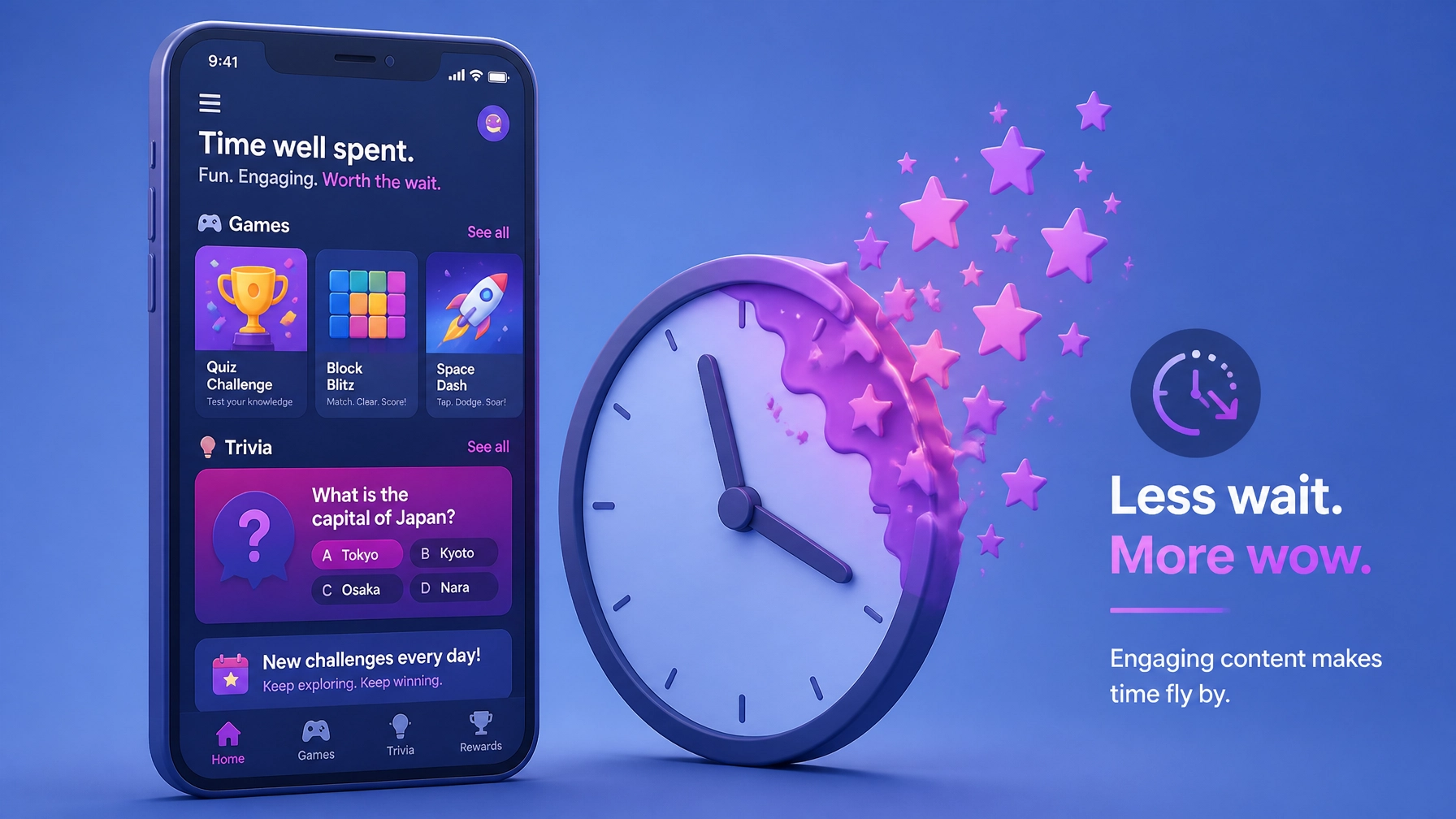
"Unmanaged waiting creates frustration. Engagement changes perception," says Scott T. Janney, CEO of CXperks. This philosophy is grounded in the reality that if you give a patient something high-quality, interactive, and relevant to do on their own device, the "perceived wait time" drops instantly.
When time is occupied with purposeful engagement: like a curated digital magazine or a trivia game: the brain stops tracking the passage of time so aggressively.
In the past, the waiting room was a "black box." You knew when a patient checked in and when they were called back, but you had zero data on what happened in between.
Modern digital engagement allows hospitals to see exactly how patients are spending their time. We can now measure:
By tracking these metrics, healthcare facilities can move from "guessing" if their patients are happy to "knowing" they are engaged. High engagement during the wait correlates directly with higher responsiveness scores on HCAHPS surveys.
The biggest barrier to digital engagement has always been "friction." No patient wants to download a hospital-branded app, create an account, and verify their email just to read a magazine while they wait for their MRI.
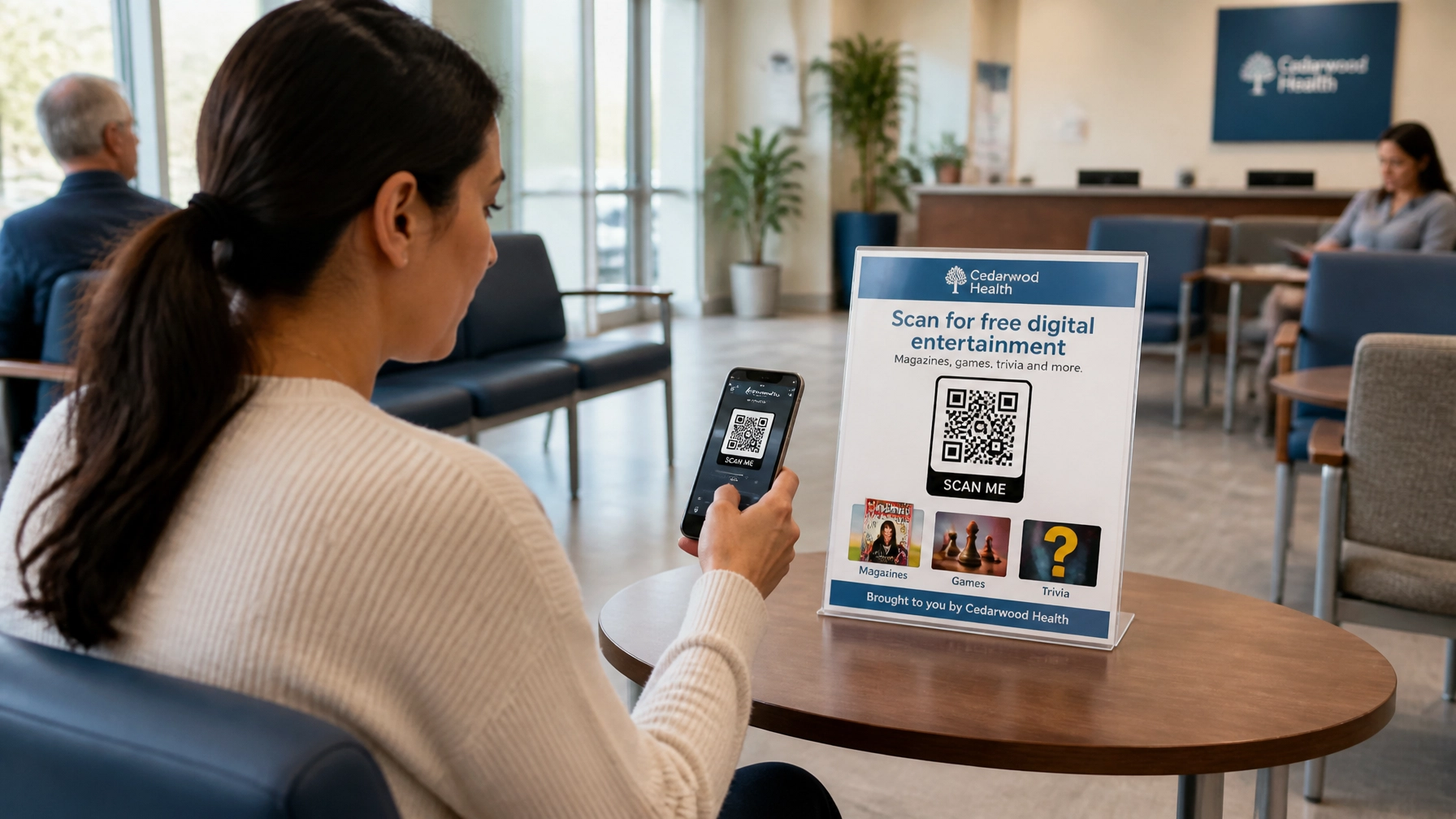
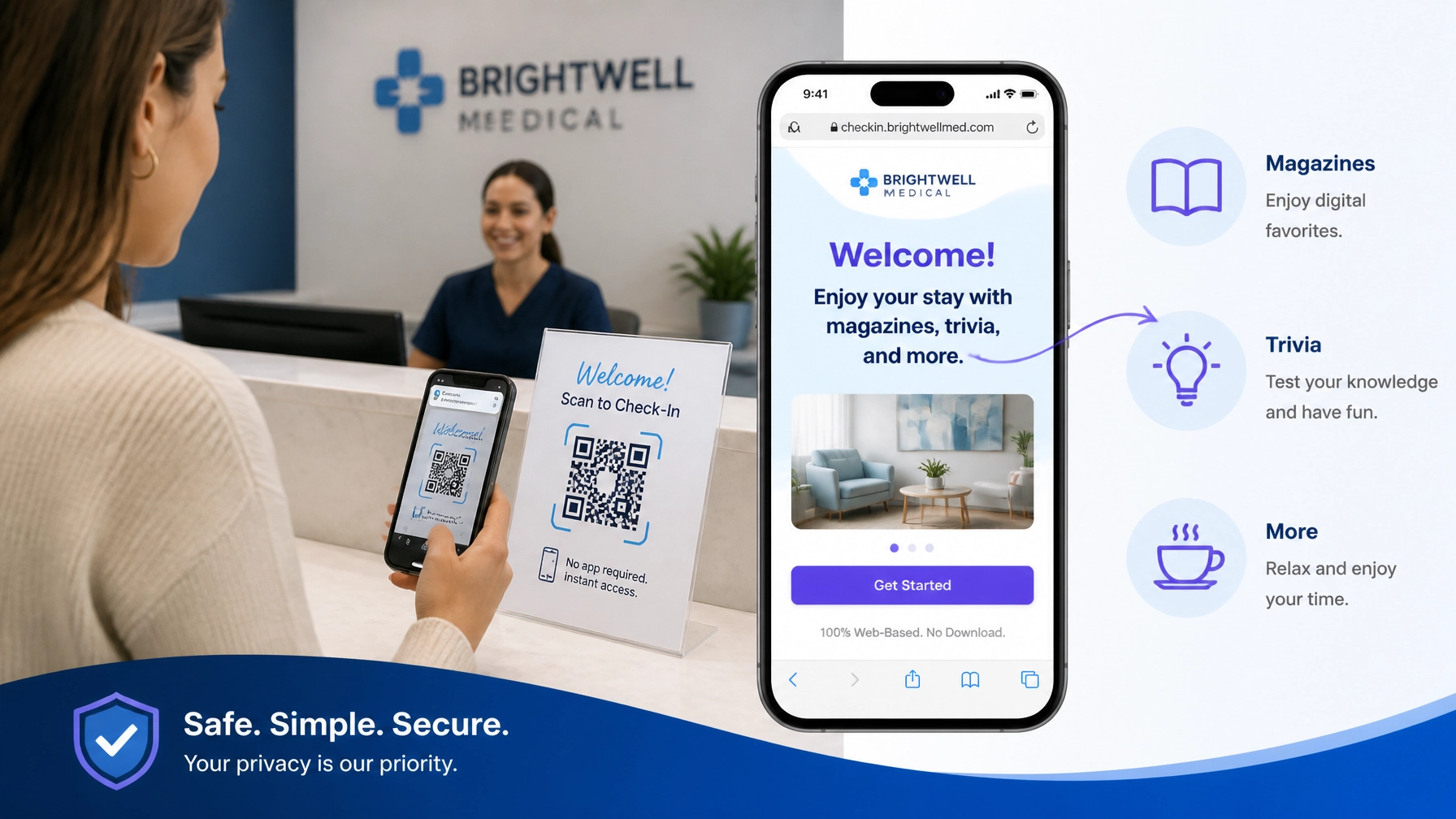
This is where the "no-app, no-PII" (Personally Identifiable Information) model wins. By utilizing a simple QR code, hospitals can provide instant access to a Digital Content Hub.
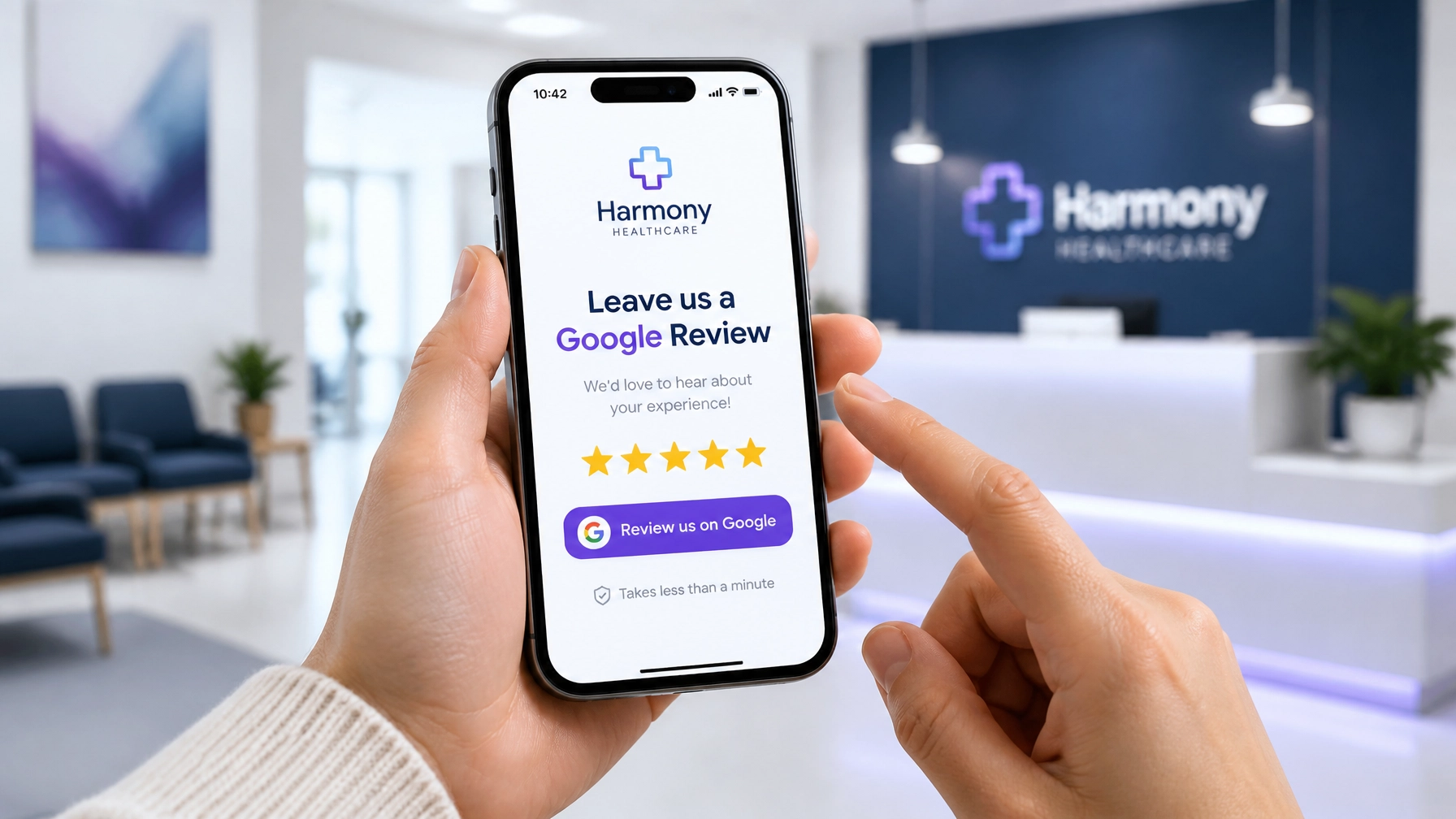
It’s a plug-and-play solution that transforms the waiting room from a place of anxiety into a lounge of interactive experiences. More importantly, it allows hospitals to prompt for Google Reviews and internal feedback at the exact moment the patient is most engaged: not three weeks later when they’ve forgotten the experience.
Your HCAHPS scores are not a reflection of your medical expertise alone. They are a reflection of the patient's entire emotional journey within your walls.
If you leave the "wait" unmanaged, you are leaving your reimbursement to chance. By shifting from passive distraction (TVs) to active engagement (digital content), you change the patient's perception of time.
Perception is reality. If they don't feel like they waited, they don't score like they waited.
Is your waiting room hurting your bottom line?
Book a strategy session with Scott T. Janney to see how digital engagement can protect your HCAHPS scores and improve your patient experience.