Why GRR's Sensory Room Proves Digital Engagement Belongs in Every Waiting Area
June 22, 2026
Learn More




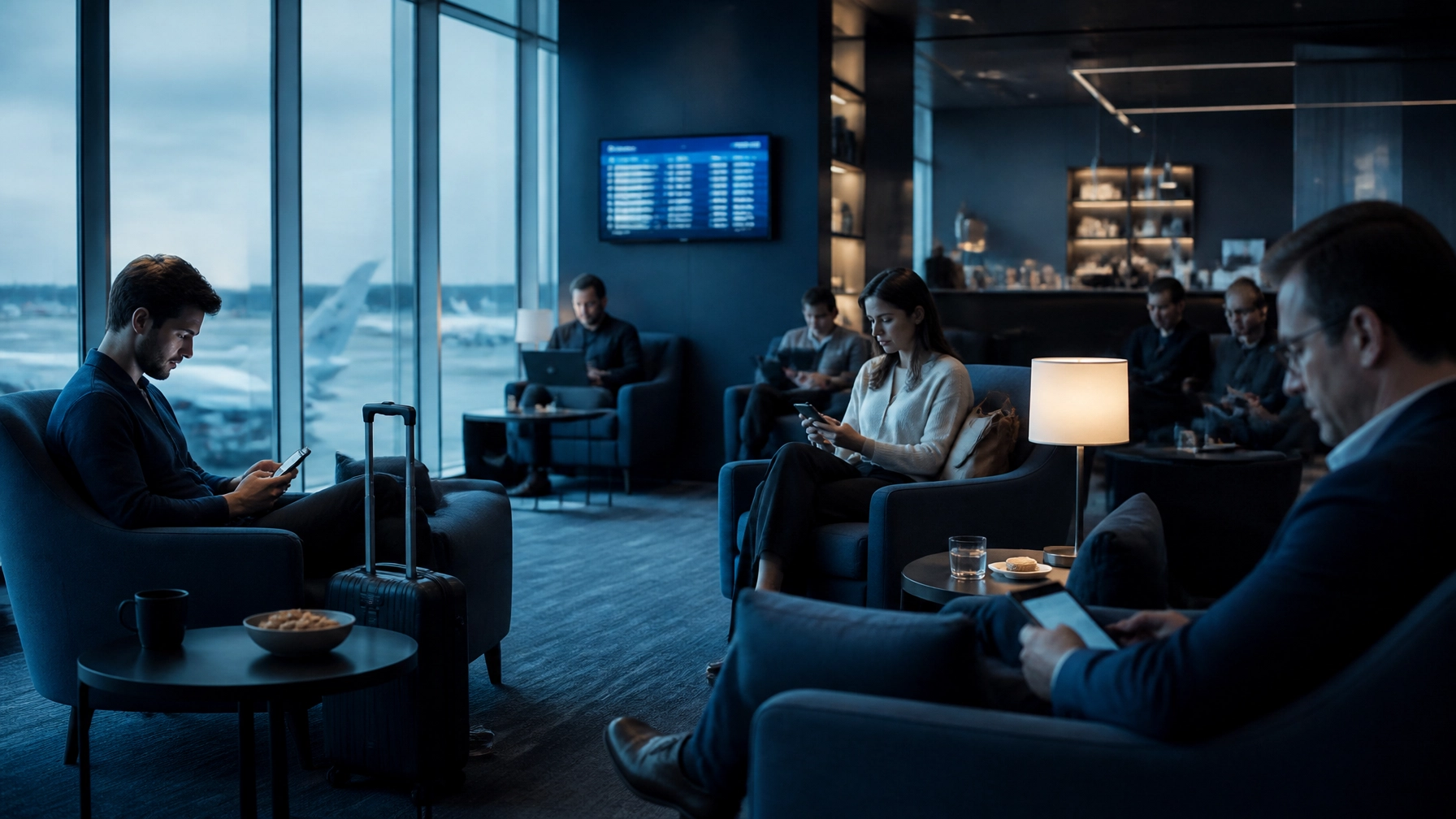
Walk into any medical clinic, auto service center, or airport lounge today and you’ll see a familiar sight.
In the corner, a TV is bolted to the wall, cycling through a cable news loop or a home renovation show on mute.
Now, look at the people in the chairs.
Almost every head is tilted down. They aren't watching the $800 screen on the wall. They are looking at the $1,000 screen in their hand.
The TV is passive. The phone is active. And in the world of customer experience, that distinction is the difference between a frustrated patient and a loyal one.
When a customer enters your waiting area, their internal clock starts ticking.
Without a plan to manage that time, you are leaving their perception of your brand to chance.
Unmanaged waiting creates frustration. It turns minutes into what feels like hours.
Research in the psychology of queuing shows that people systematically overestimate wait times by as much as 20% to 50%.
If they have nothing to do but stare at the clock or a TV they didn't choose, that "temporal anxiety" grows.
They start checking their watch. They wonder if they’ve been forgotten. They start formulating a 3-star review before they’ve even seen a provider.
For decades, the "TV in the corner" was the gold standard for distraction. It was a one-size-fits-all solution for a problem we didn't fully understand.
But in 2026, the passive TV has become background noise at best and an irritant at worst.
First, there is the issue of relevance. Why would a patient in a healthcare waiting room want to watch a loud cooking show or, worse, stressful political news?
Second, there is the "passive" nature of the medium. The viewer has zero agency. They cannot skip, they cannot interact, and they cannot choose.
Finally, there is the cost. Hardware, mounting, cable subscriptions, and maintenance add up.
Worst of all, you can't measure if anyone is actually watching. You are paying for a screen that most of your customers are actively trying to ignore.
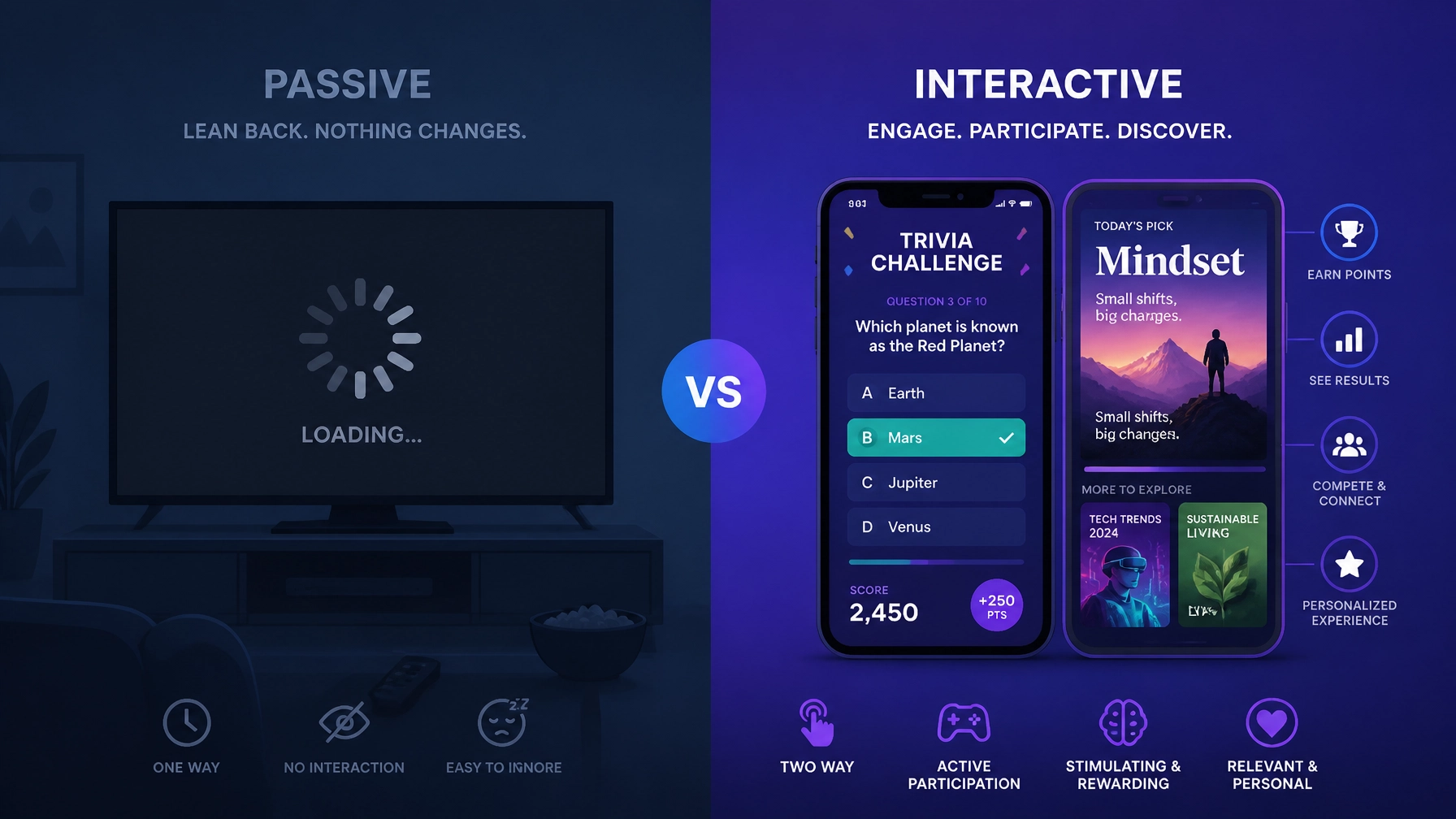
The smartphone has fundamentally changed how we wait.
It is no longer just a communication device; it is a tool for agency.
According to observational studies, 60% to 80% of people in waiting environments are engaged with their mobile devices at any given time.
They use their phones to reclaim their time. They check emails, play games, or scroll social media.
This is "active" waiting. David Maister, a leading researcher on the psychology of waiting, famously noted that "occupied time feels shorter than unoccupied time."
The problem is that most businesses aren't participating in that occupied time. They are letting their customers wander off into the depths of the internet rather than inviting them into a curated, branded experience.
In operational thinking, we often focus on the "clock time": the actual minutes spent waiting.
But as Scott T. Janney, CEO of CXperks, often points out, "Engagement changes perception."
If a patient waits 20 minutes but spends 15 of those minutes deeply engaged in a piece of content, their perceived wait time is drastically lower.
This isn't just about entertainment; it’s about HCAHPS and HWS scores.
In healthcare, communication about wait times and the quality of the waiting environment are strong predictors of overall patient satisfaction.
When you provide a way for patients to engage through their phones, you aren't just distracting them. You are signaling that you value their time.
Many businesses try to solve this by building their own apps.
This is a mistake.
The modern consumer has "app fatigue." They do not want to download a new piece of software, create an account, and give away their personal data just to wait for an oil change or a dental cleaning.
Frictionless engagement is the only way to win in a high-dwell environment.
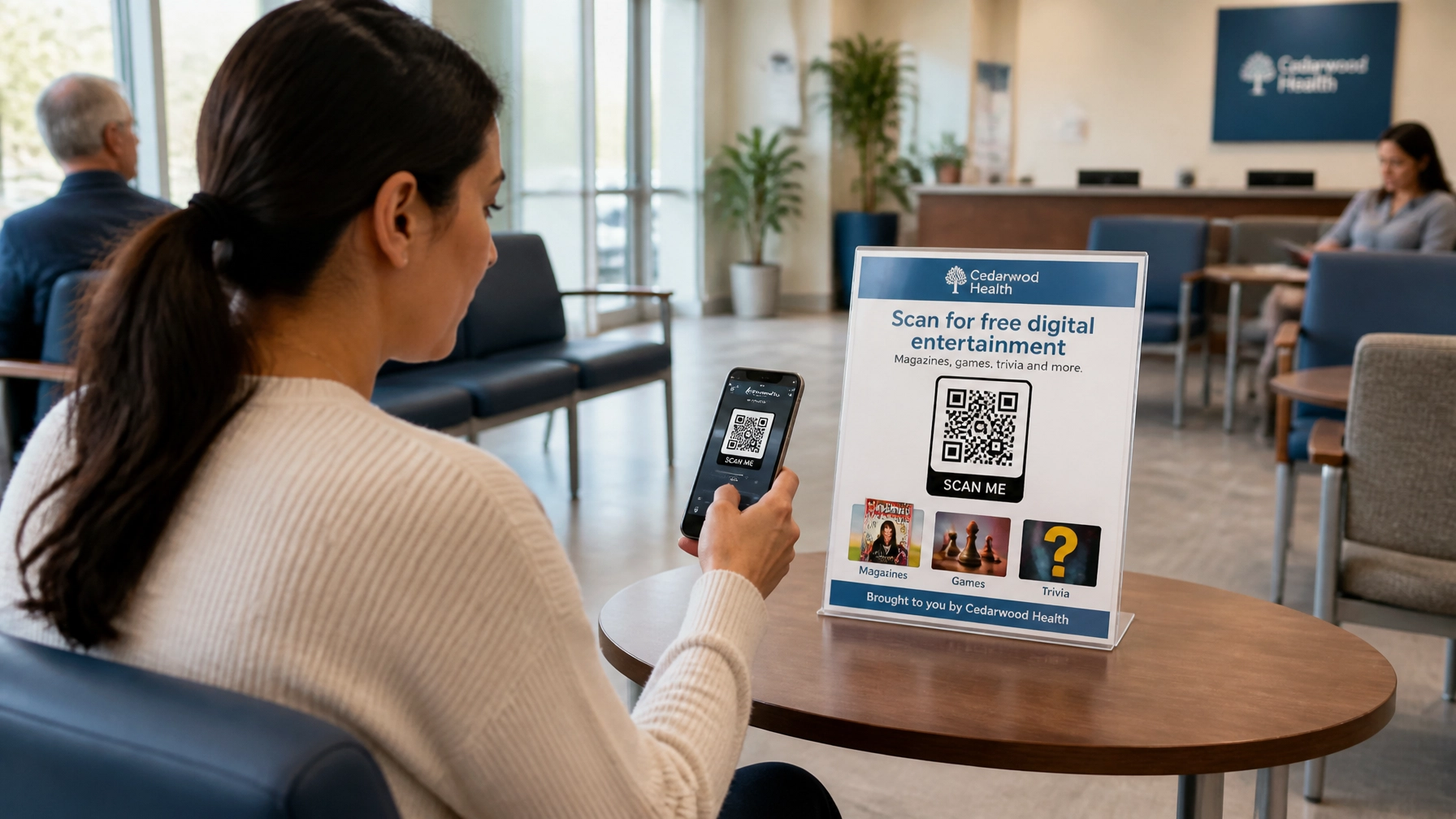
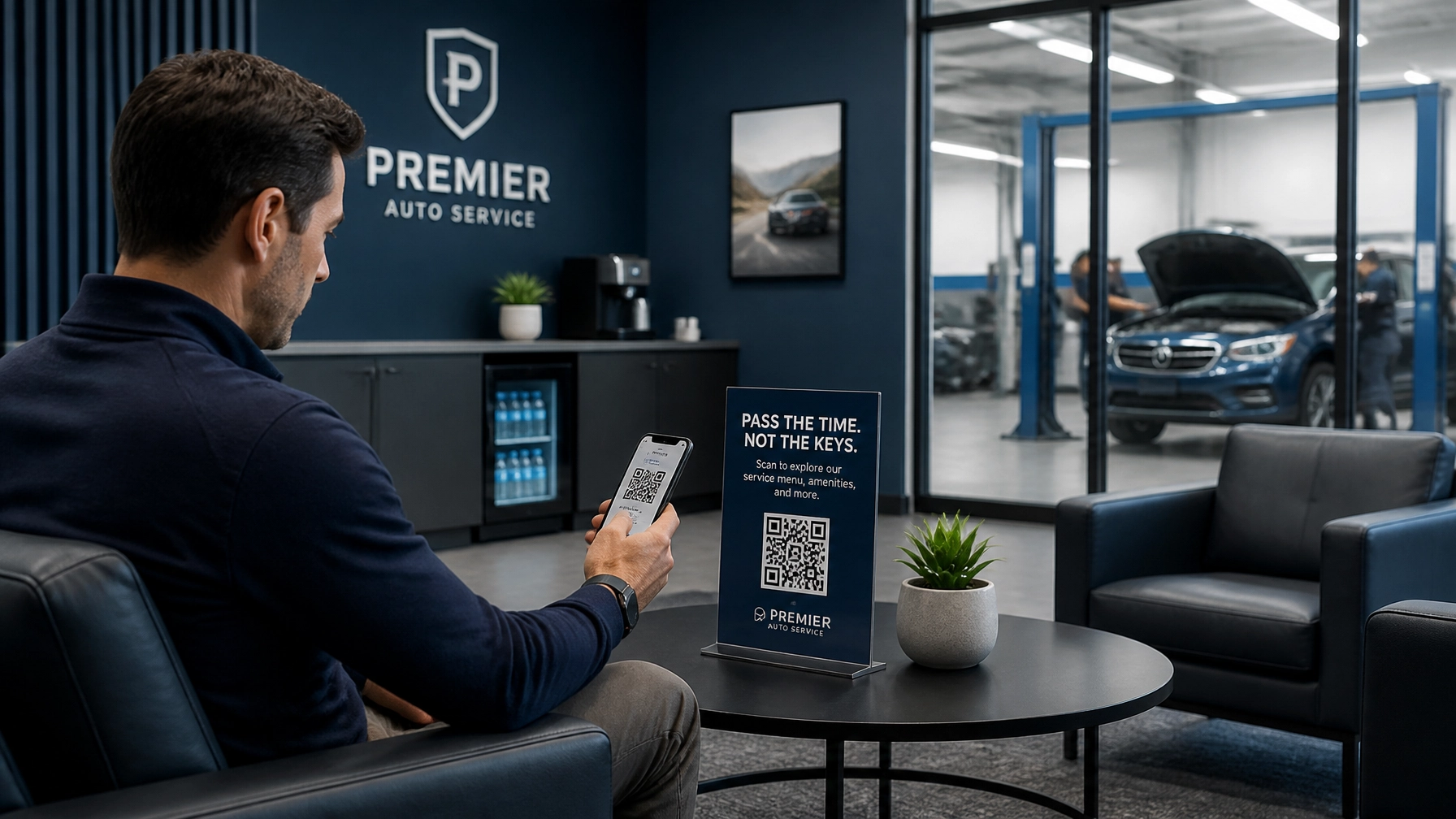
This is why CXperks focuses on the "scan-and-play" model.
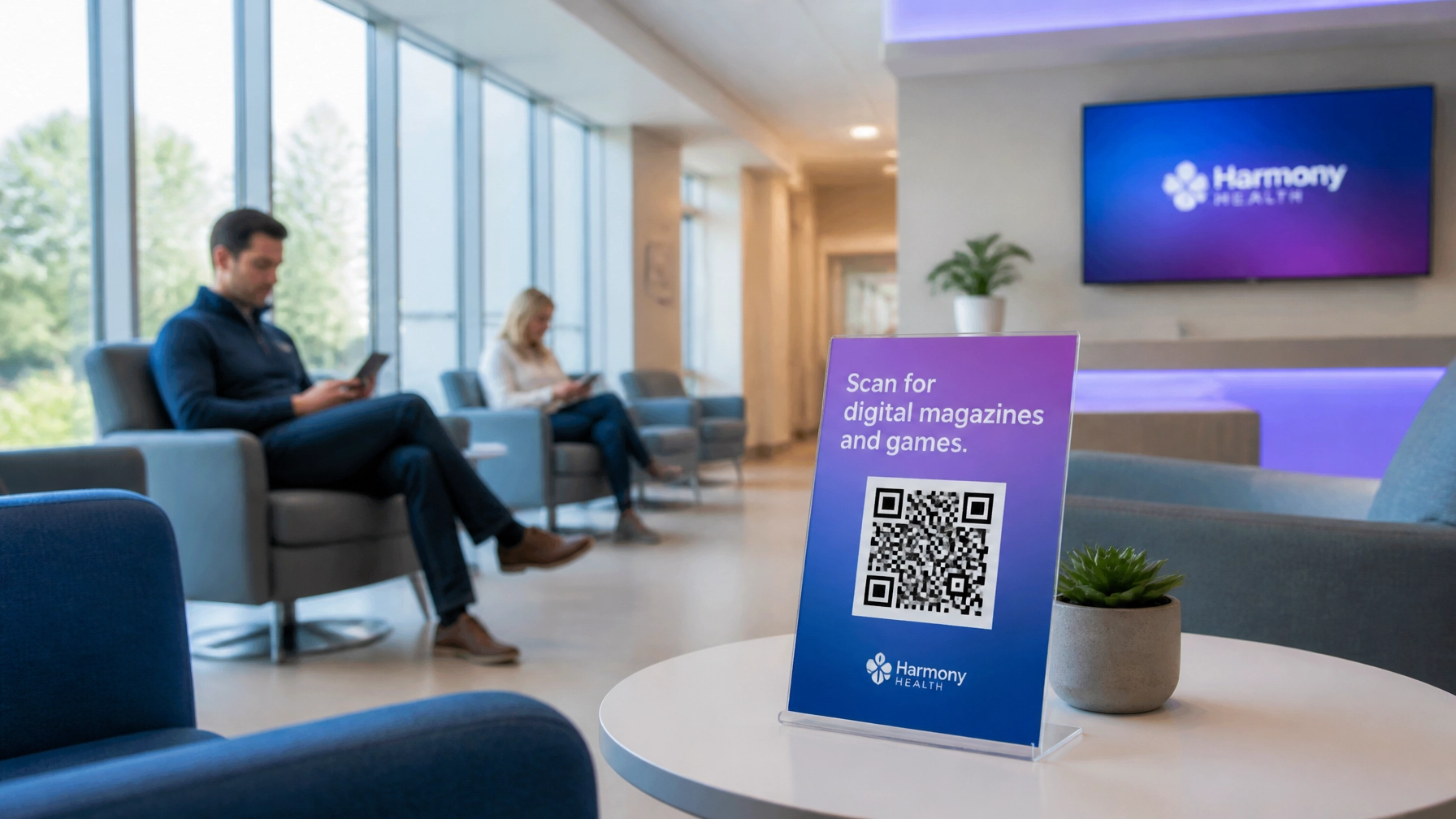
By using a simple QR code, businesses can instantly transform a customer's phone into a digital content hub.
No apps. No logins. No personal data required.
This "no-PII" (Personally Identifiable Information) approach respects the customer’s privacy while providing them with the engagement they crave.
Unlike a TV on the wall, digital engagement is measurable.
When a customer scans a QR code in your auto service center or salon, you get real-time data.
You can see:
This data allows managers to understand the "dwell time" of their location and optimize the experience accordingly.
It turns a "dead zone" into a source of valuable business intelligence.
At CXperks, we believe the waiting room shouldn't be a source of stress.
Our platform is designed to plug directly into your existing operations.
Whether it's a laundromat, a hotel lobby, or an airport terminal, the goal is the same:
Provide high-quality, curated digital content that keeps the user's mind off the clock.
We offer everything from trivia and interactive games to digital magazines and review prompts.
By giving the customer something active to do, you change the emotional state of the room.
The "silent" frustration is replaced by quiet engagement.
The era of the waiting room TV as a primary entertainment tool is over.
You are no longer competing with other businesses for your customer's attention; you are competing with the device in their pocket.
Stop trying to pull their eyes up to a screen they don't want to watch.
Instead, give them something worth doing on the screen they are already holding.
Unmanaged waiting creates frustration. Engagement changes perception.
The question for 2026 isn't how to make the wait shorter. It's how to make the wait matter.
Ready to transform your waiting experience?
Book a consultation with Scott T. Janney to see how CXperks can improve your engagement metrics and boost your online reputation.