Why GRR's Sensory Room Proves Digital Engagement Belongs in Every Waiting Area
June 22, 2026
Learn More




Stop asking your patients to download your app.
They don’t want it, they won’t keep it, and the mere suggestion is creating a barrier before they even see a provider.
If you are a healthcare administrator or a clinic manager, you’ve likely been told that a "branded app" is the holy grail of patient engagement.
You’ve been promised "seamless integration" and "long-term loyalty."
But the reality on the ground: in the actual waiting room: is much different.
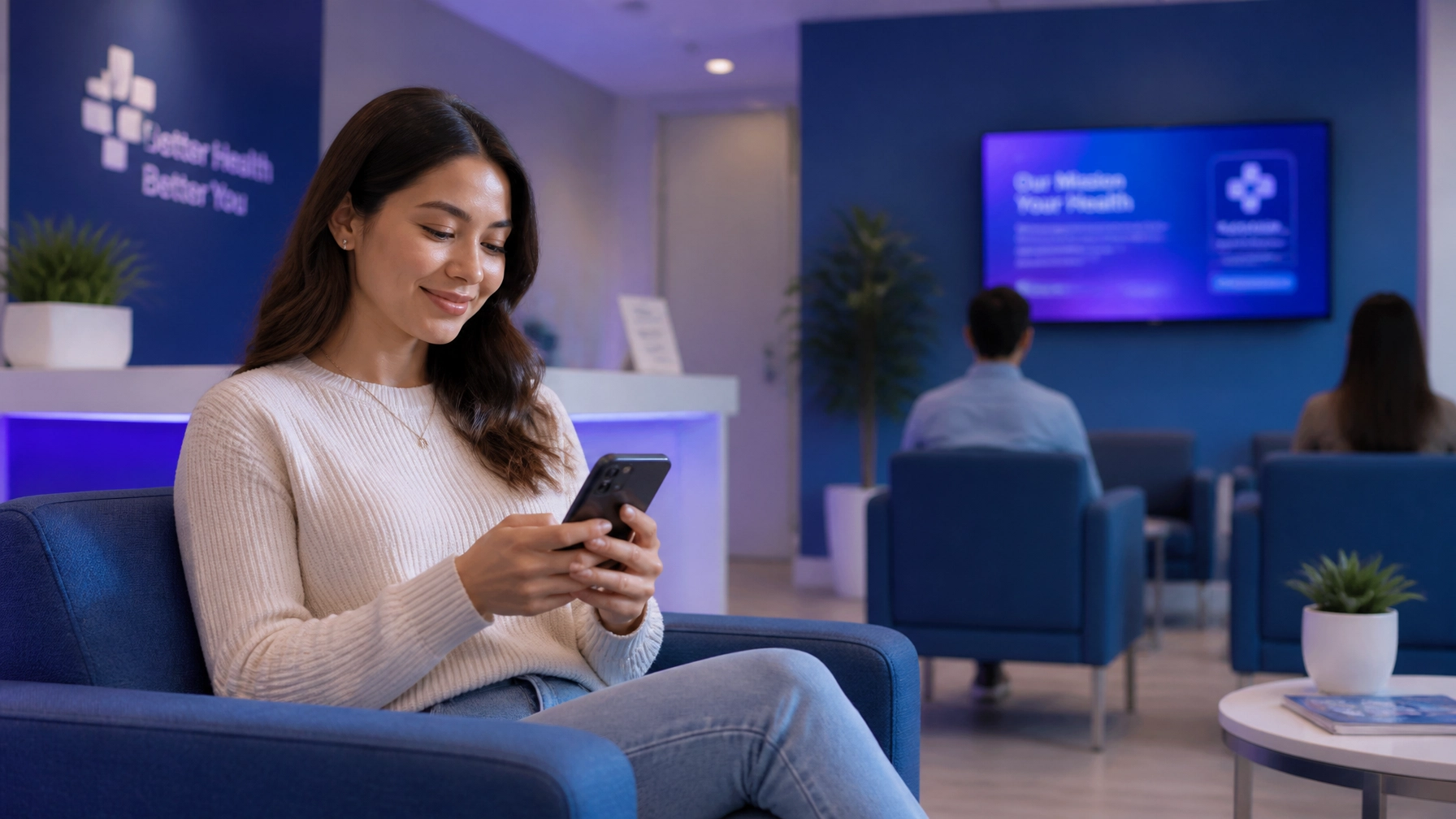
We see it every day: patients staring at their phones, avoiding the outdated magazines and the muted TV in the corner, yet refusing to engage with the very digital tools you’ve spent thousands to build.
There is a fundamental disconnect between how businesses want to engage and how humans actually behave in 2026.
Waiting is an emotional experience, not just a logistical one.
When a patient sits in your waiting room, they are often anxious, bored, or feeling unwell.
Their phone is their primary tool for distraction and comfort.
But when you ask them to "Download our app for the best experience," you are adding a chore to an already stressful situation.
You are asking them to find the App Store, remember their password, wait for a download on spotty clinic Wi-Fi, and then: inevitably: create an account with an email they’ll never check.
This is what we call "digital friction."
It’s the silent killer of patient satisfaction scores and engagement metrics.
According to research on digital fatigue, nearly 72% of users are "mildly annoyed" when a business requires an app download to access basic services or information.
In a healthcare setting, that annoyance translates directly into lower HCAHPS scores and a poorer perception of care.
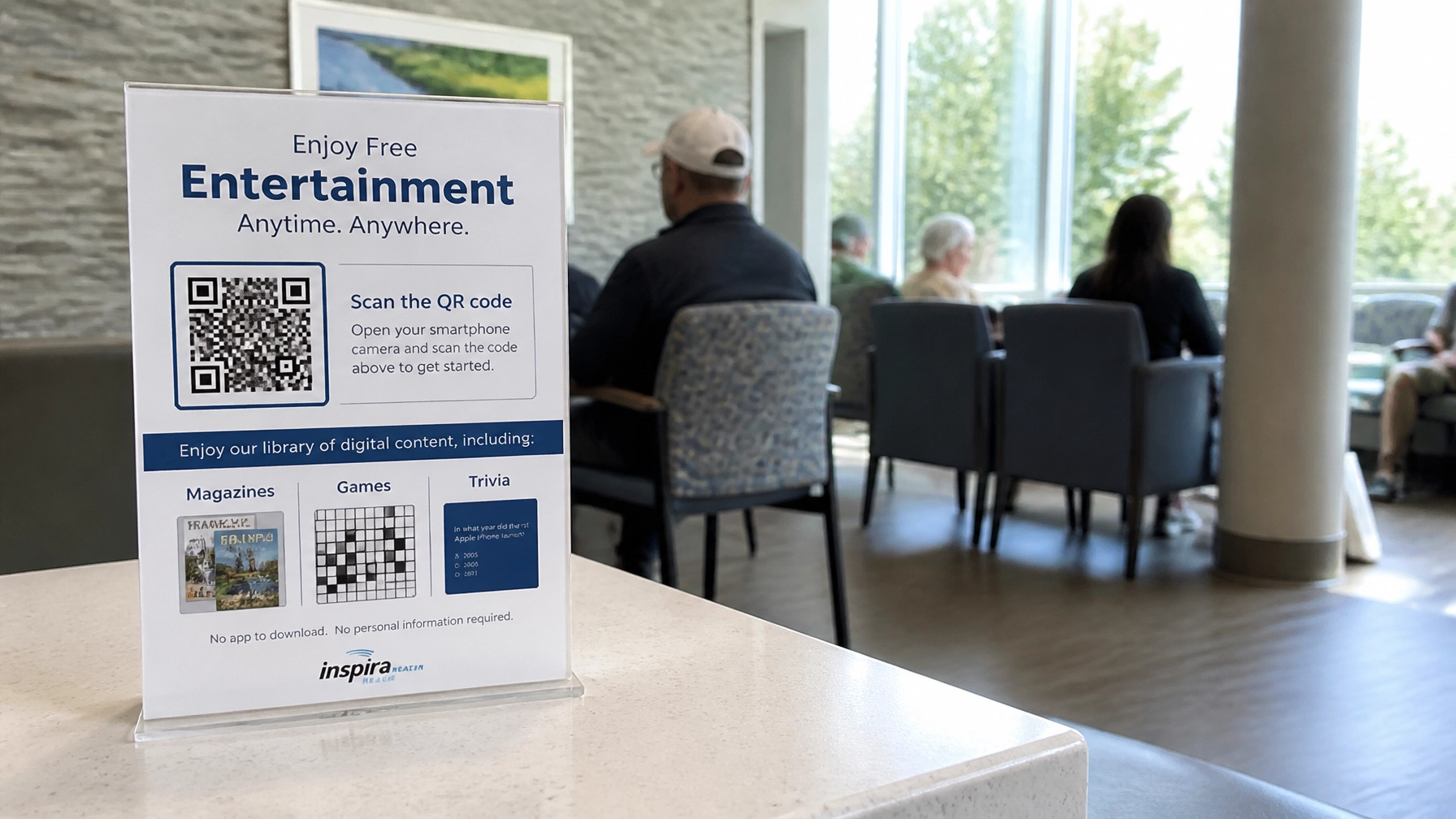
For decades, the standard solution for the waiting room was a TV mounted in the corner.
Usually, it’s tuned to a news cycle that increases anxiety or a "health network" that patients tune out as background noise.
It’s a passive, one-way broadcast that ignores the person sitting right in front of it.
Then came the Branded App phase.
The idea was to "own" the patient's screen.
But data shows that 77% of users stop using a new app within 72 hours of downloading it.
If your patient only visits twice a year, that app is deleted before they even get back to their car.
"Unmanaged waiting creates frustration. Engagement changes perception," says Scott T. Janney, CEO of CXperks.
This philosophy, central to our mission at CXperks, highlights the core issue: if the engagement isn't instant and effortless, it isn't engagement: it's an obstacle.
Your patients are already on their phones.
They are scrolling social media, checking emails, or playing games to kill time.
They don't need a new "destination" (your app); they need a bridge from their current state of boredom to a high-value experience.
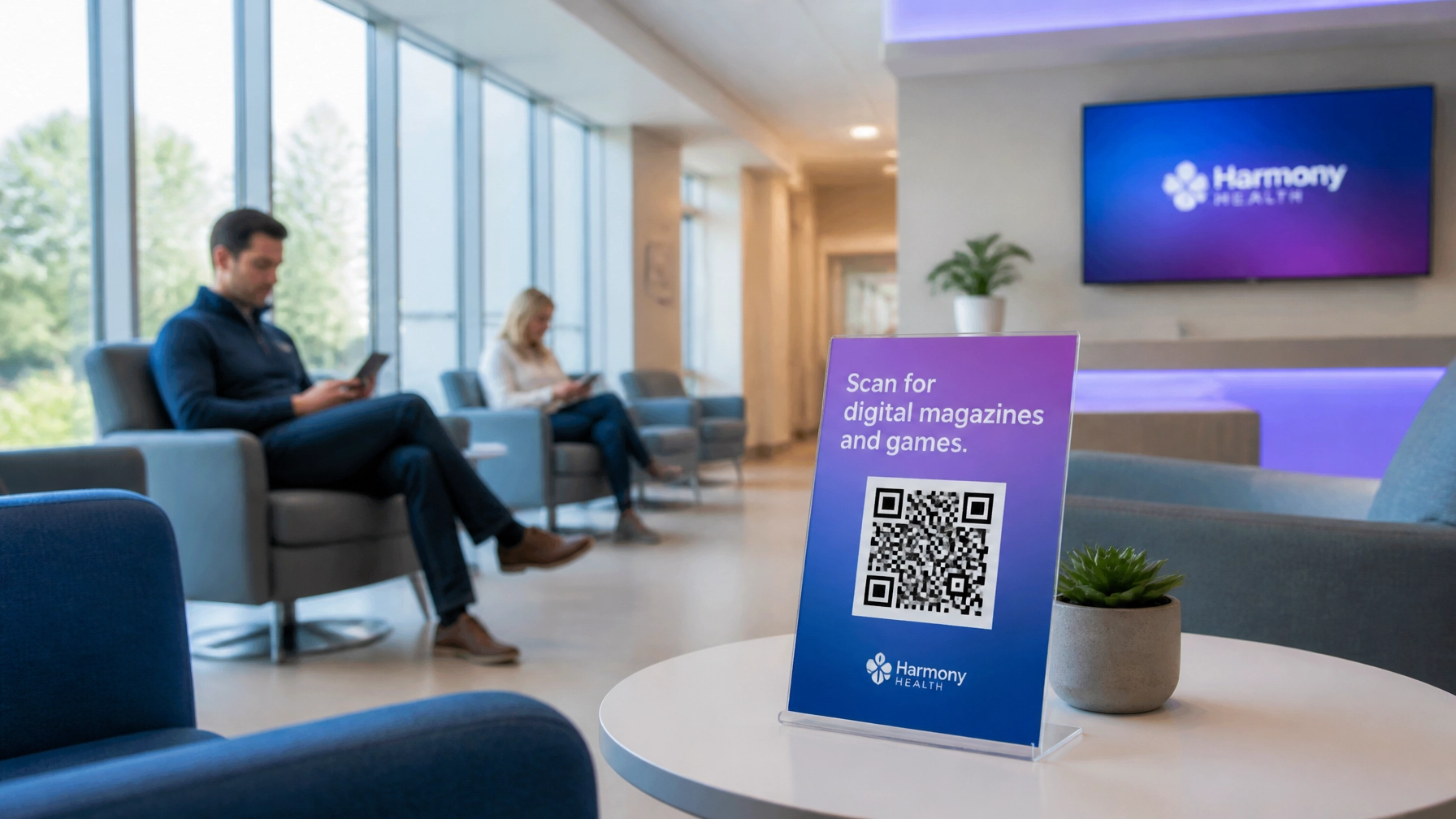
This is where the QR code: specifically a frictionless, web-based hub: wins every time.
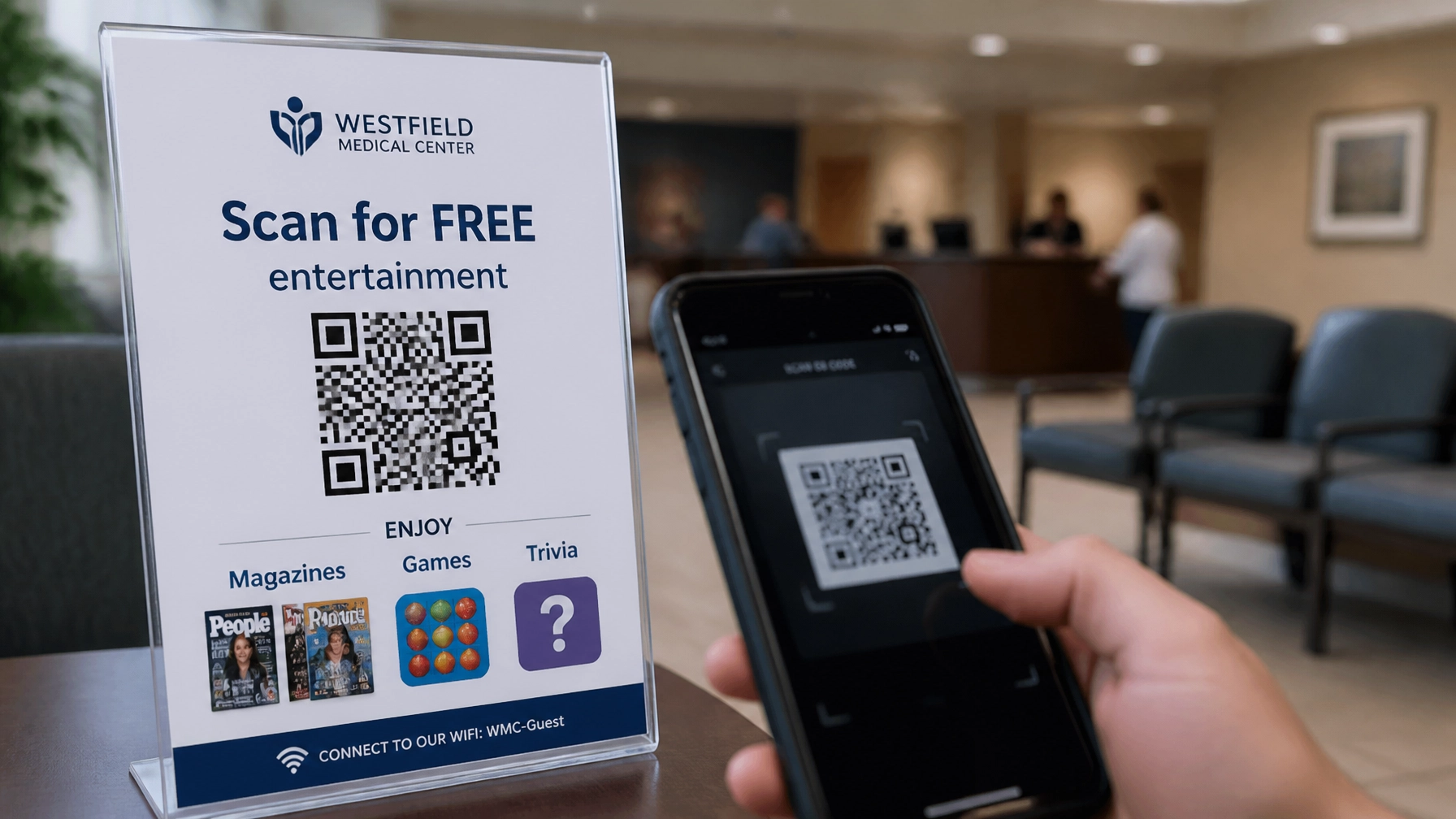
A QR code is a "point-and-scan" interaction that takes less than three seconds.
There is no password, no PII (Personally Identifiable Information) collection, and no long-term commitment.
It is the digital equivalent of handing someone a high-end magazine, but one that is interactive, personalized, and updated in real-time.
By using digital content hubs, you aren't fighting for space on their home screen; you are providing immediate value in the moment they need it most.
When we talk to healthcare leaders, they often focus on "downloads."
But a download is a vanity metric if the user never opens the app again.
The metrics that actually drive ROI and patient satisfaction are:
Research indicates that high-dwell environments are the best place to capture feedback.
If you make a patient jump through the hoops of an app download just to give you a review, they won't do it.
If you give them a "one-tap" Google review prompt inside a digital magazine they are already reading, your review volume skyrockets.
This is the difference between forced participation and natural engagement.
At CXperks, we built our platform on the belief that privacy and simplicity should be the default, not an afterthought.
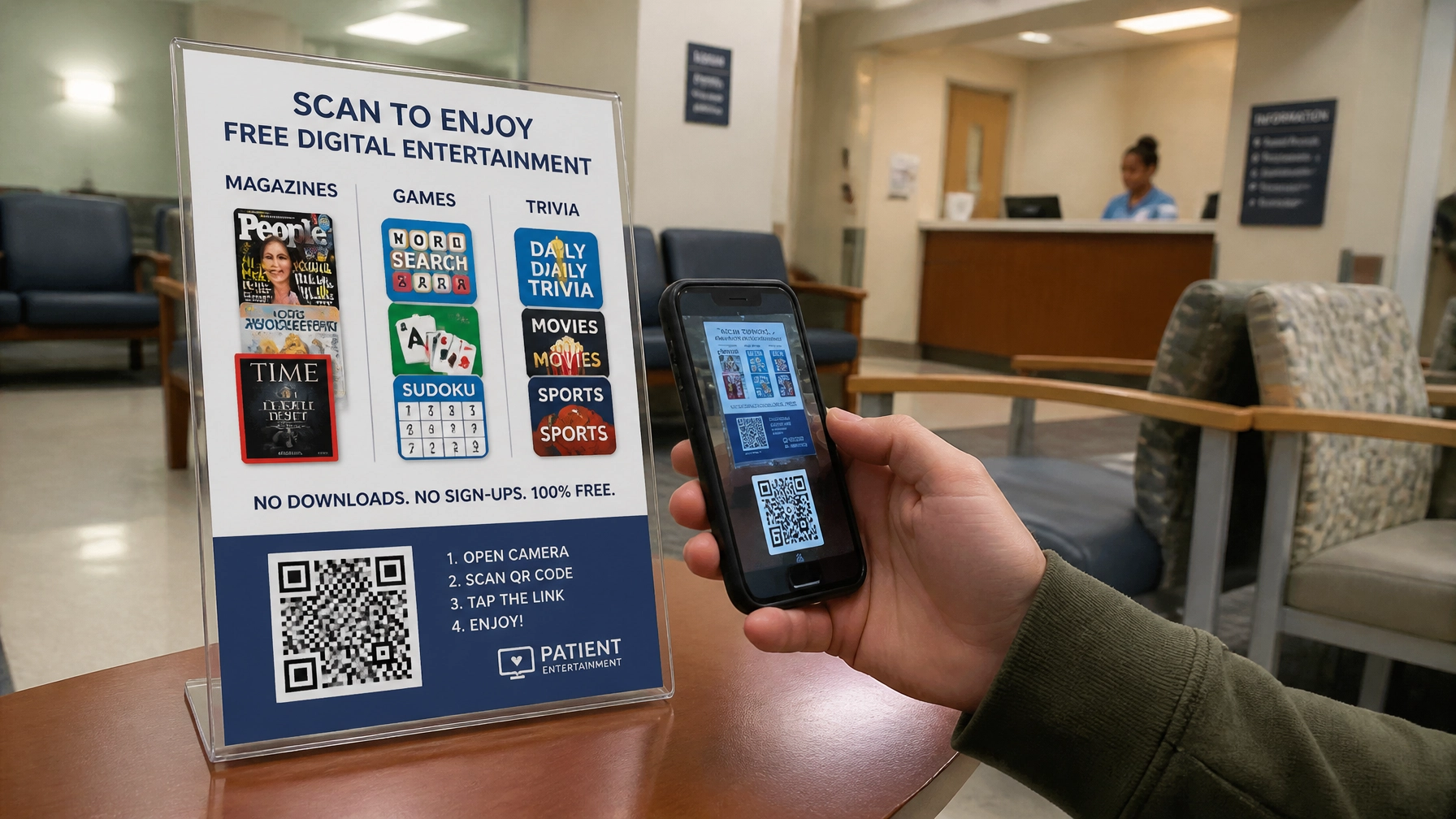
Our "plug-and-play" digital engagement platform requires no apps and no hardware.
We provide a curated Digital Content Hub: trivia, magazines, and interactive experiences: accessible instantly via a QR code.
For a medical or dental office, this means:
It’s about transforming the "dead time" of a waiting room into a loyalty-driving experience.
In the end, your patients don't care about your technology stack.
They care about how they feel while they are waiting for you.
If you force them into a walled garden (an app), you are signaling that your convenience matters more than theirs.
If you provide a frictionless window into engagement (a QR code), you are signaling that you respect their time and their privacy.
The choice between QR codes and branded apps isn't a technical one; it's a strategic one.
One builds walls. The other builds bridges.
Which one are you building in your waiting room today?
Want to see how frictionless engagement can transform your patient experience?
Book a 15-minute discovery call with our CEO, Scott T. Janney, here.