Why GRR's Sensory Room Proves Digital Engagement Belongs in Every Waiting Area
June 22, 2026
Learn More




In the modern healthcare landscape, the transition from volume-based care to value-based care has fundamentally shifted how providers view their operations. No longer is a hospital or clinic merely a place of clinical intervention; it is now a service environment where patient perception carries significant weight on the balance sheet. As patients increasingly adopt a consumer-first mindset, their expectations for efficiency, communication, and comfort have skyrocketed. Consequently, healthcare organizations are discovering that the "front door" of their facility: specifically the waiting room: is where the ROI of patient happiness is either won or lost.
Managing this experience is no longer a secondary concern for administrative staff. It is a strategic necessity. To thrive in this environment, healthcare leaders must view the patient experience through the lens of a "measurable infrastructure layer" that bridges the gap between clinical excellence and financial sustainability.
The correlation between patient satisfaction and hospital profitability is not just anecdotal; it is a documented financial reality. The Hospital Consumer Assessment of Healthcare Providers and Systems (HCAHPS) scores directly influence the reimbursement rates distributed by the Centers for Medicare & Medicaid Services (CMS). When patients report high levels of satisfaction, the facility is rewarded; when scores dip, the financial penalties can be substantial.
Wait times are consistently cited as the primary driver of patient dissatisfaction. However, the true impact of the waiting room goes beyond the minutes spent on a chair. It sets the psychological tone for the entire clinical encounter. A patient who feels neglected in the lobby is far more likely to perceive their physician as "rushed" or their care as "uncoordinated," regardless of the actual clinical outcome. This "halo effect" (or "horns effect") significantly skews CMS perception scoring, making it imperative to manage the environment before the patient ever enters the exam room.

One of the most critical realizations for modern healthcare administrators is that the stopwatch time: the actual number of minutes a patient waits: is often less important than the perceived wait time. In the world of behavioral economics, "unoccupied time" feels significantly longer and more frustrating than "occupied time." When a patient sits in a silent room with nothing but outdated magazines and a ticking clock, their anxiety increases and their perception of the facility’s efficiency plummets.
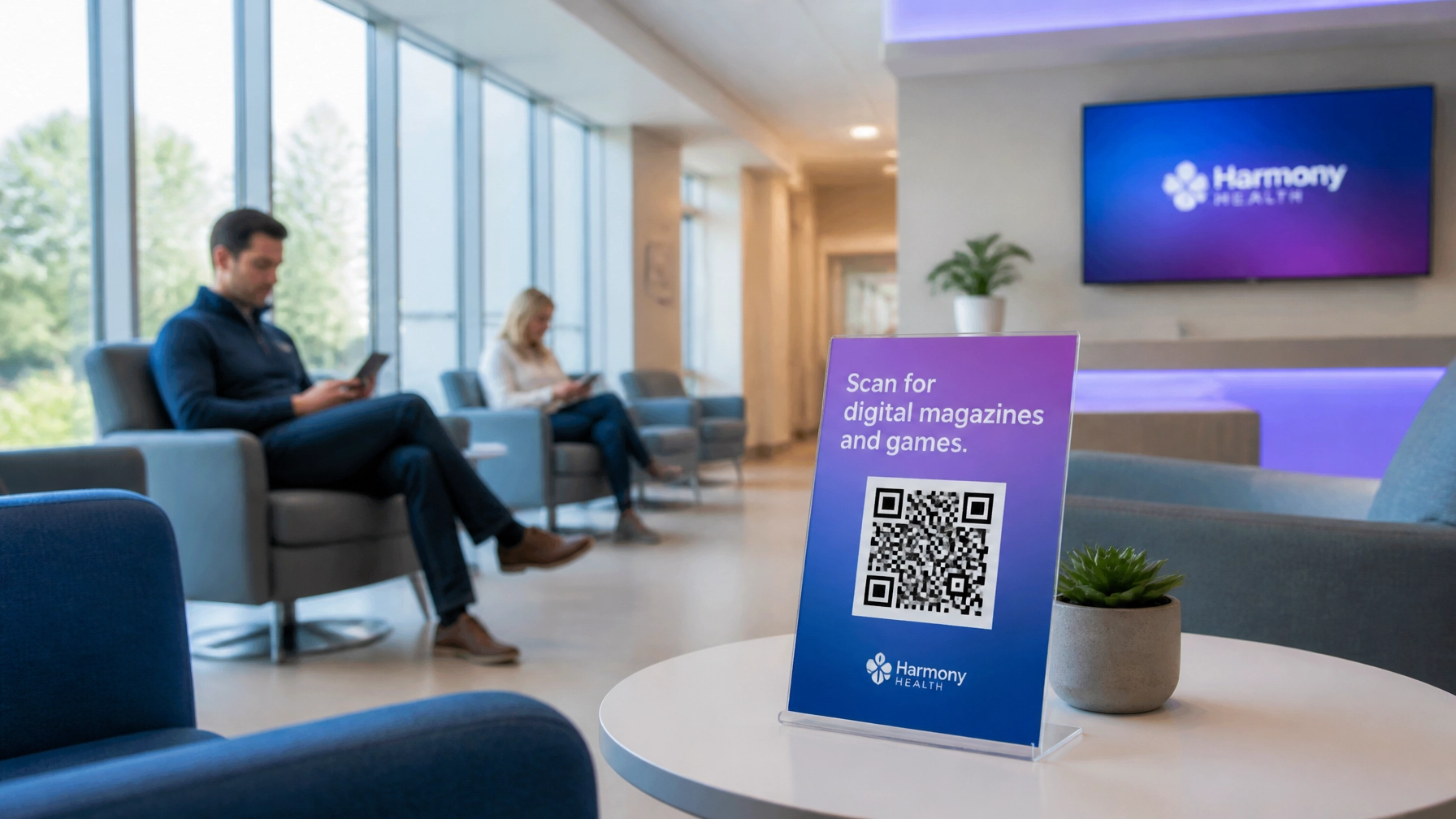
CXperks operates as a sophisticated perception management platform. By transforming the waiting room from a static space into an engaging, interactive environment, we fundamentally alter the patient's internal clock. When patients are provided with high-quality, curated content and rewards, the "wait" becomes an "experience." This shift in perception is what allows providers to maintain high satisfaction scores even during unavoidable peak periods or staffing shortages.
Many healthcare facilities treat patient experience as a series of disparate initiatives: a new coffee machine here, a friendlier greeting there. At CXperks / Primary, we argue that the patient experience should be treated as a core infrastructure layer, much like your EMR or your billing system. This layer must be measurable, scalable, and directly tied to your operational goals.
By integrating a digital patient-experience layer, facilities gain the ability to:
When you view your waiting room as an asset rather than a liability, you unlock the ability to manage it with the same precision you apply to your clinical workflows. To see how this looks in practice, you can explore our healthcare solutions page.
In the realm of SaaS and healthcare technology, data is the only currency that matters. One of the most compelling metrics we share with our partners is our 4.3/5 consumer validation score. This isn't just a measure of how much patients enjoy the content; it is a validation of the entire perception management model.
When patients interact with the CXperks platform, they are not just "passing the time." They are engaging with a system that respects their time and rewards their presence. This high validation score translates directly into:

While CMS scoring is a vital short-term financial driver, the long-term ROI of patient happiness lies in retention. It is well-established in the business world that acquiring a new customer is five to twenty-five times more expensive than retaining an existing one. Healthcare is no different. A patient who feels valued and respected is far less likely to "leak" to a competitor or seek care at a different health system.
Effective perception management fosters loyalty. When you optimize the wait, you are demonstrating a commitment to the patient's overall well-being. This leads to higher patient lifetime value (LTV) and a more stable revenue stream for the organization. For channel partners looking to provide more value to their healthcare clients, offering a solution that addresses both immediate CMS scoring and long-term retention is a powerful strategic move. You can learn more about our affiliate and partner programs here.
Implementing a perception management platform may seem like a significant shift, but it is a manageable and highly rewarding transition. Here are the steps to begin:
To maximize the ROI of your patient experience infrastructure, consider these best practices:
By focusing on these areas, you turn the "dead time" of waiting into "active time" for brand building and patient education.

The link between patient happiness and financial performance is undeniable. By investing in a perception management platform, you aren't just buying software; you are installing an infrastructure layer designed to protect your CMS reimbursements, improve your HCAHPS scores, and foster lifelong patient loyalty.
The future of healthcare belongs to the providers who understand that the care journey starts the moment a patient walks through the door. Stop viewing the waiting room as a logistical hurdle and start seeing it as a strategic opportunity.
Start today and watch your patient satisfaction scores soar.
To discuss how CXperks can specifically benefit your facility or to see a live demonstration of our platform in action, we invite you to connect with our leadership team.
Book a strategy session with our CEO, Scott T. Janney, here.