Why GRR's Sensory Room Proves Digital Engagement Belongs in Every Waiting Area
June 22, 2026
Learn More



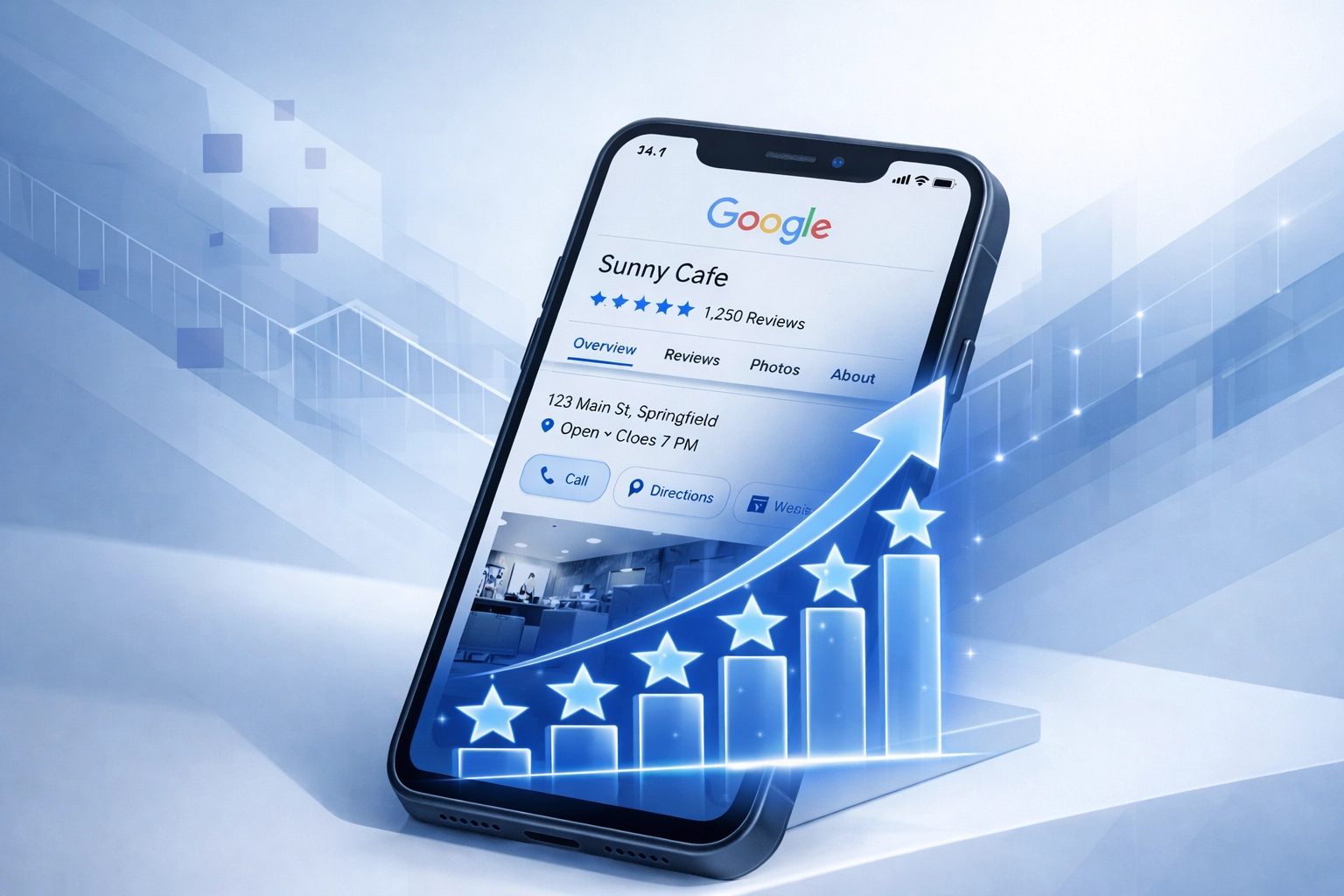
If you're running brick-and-mortar locations in 2026, you've already felt the shift. Google isn't playing around anymore when it comes to review manipulation. The businesses that got away with incentivized reviews, selective solicitation, and "only happy customers" campaigns? They're now facing account restrictions, visibility drops, and credibility hits that are costing them real revenue.
Meanwhile, the businesses building authentic, compliant review systems are quietly dominating local search rankings and winning customer trust at scale.
Here's what changed, and how to build a review strategy that Google actually wants to promote.
Let me be direct: Google's approach to reviews fundamentally shifted in 2026. This isn't about stricter policy language buried in Terms of Service documents. This is active, algorithmic enforcement that directly impacts your search visibility, map rankings, and how Google's AI systems recommend your business to potential customers.
Why now? Because fake reviews don't just hurt competitors, they undermine Google's entire recommendation infrastructure. As AI increasingly relies on review text, sentiment patterns, and engagement signals to surface businesses, maintaining review integrity became a business priority for Google, not just a compliance checkbox.
The platform is now using machine learning to detect manipulation patterns, flag suspicious review clusters, and penalize businesses that violate guidelines, even if those violations happened months ago.
This is where I see most retail operators stumble. They think they're being clever with "workarounds," but Google's systems have seen it all. Here's what you absolutely cannot do in 2026:
1. Offering Any Form of Incentive for Reviews
No discount codes. No freebies. No "enter our monthly drawing for leaving a review" campaigns. Google's policy is explicit: you cannot compensate customers, directly or indirectly, for reviews. This includes loyalty points, future discounts, or contest entries.
2. Selectively Soliciting Only Happy Customers
Asking only satisfied customers to leave reviews while ignoring (or actively discouraging) unhappy ones is a clear violation. Google's systems can detect when your review timing, volume, and sentiment patterns don't match typical customer behavior.
3. Filtering or Blocking Negative Feedback
Creating barriers that prevent dissatisfied customers from leaving reviews, like multi-step complaint forms before they can access your review link, triggers algorithmic flags. Google wants to see authentic customer sentiment, including criticism.
The pattern is clear: any attempt to artificially inflate your review profile violates policy and carries enforcement risk.
Here's the strategic shift: the safest approach is also the most effective. You need to build a simple, compliant review habit that customers actually follow through on, without manipulation tactics.
This is the operational framework we use at CXperks to help businesses scale reviews the right way:
Request reviews at the moment customers are most satisfied, right after completing a positive transaction. For in-store purchases, this means asking immediately at checkout or following up within 24-48 hours while the experience is fresh.
The key is consistency. Every customer gets the same ask, at the same point in their journey.
Apply the same review request to all customers, not just those you predict will be positive. This ensures your review profile reflects actual customer sentiment, which is exactly what Google's systems now prioritize when ranking businesses.
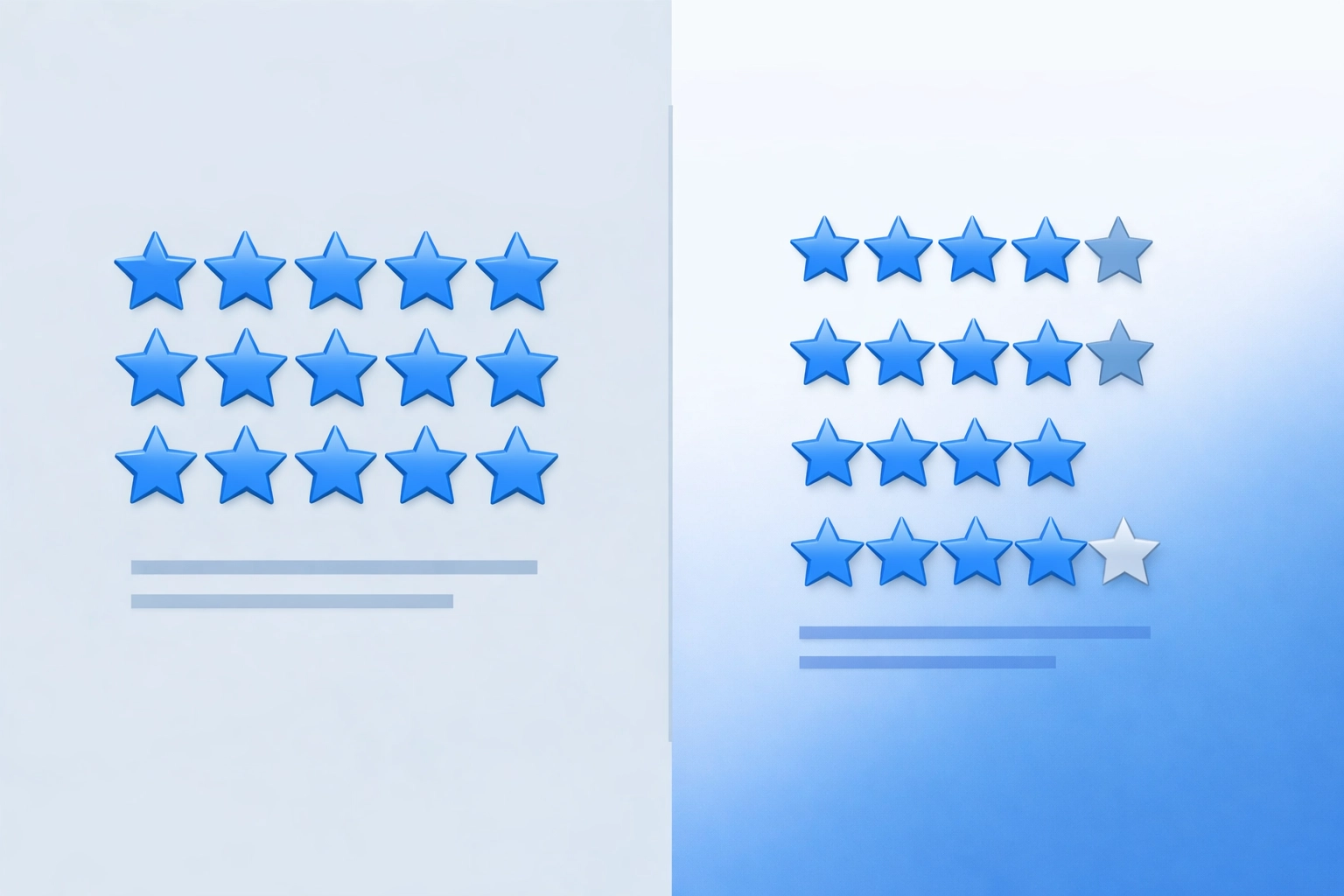
Yes, this means you'll get some negative reviews. But here's what most operators miss: businesses with only 5-star reviews look suspicious to both Google's algorithms and potential customers. A healthy mix of ratings (with a strong positive trend) signals authenticity.

Make review requests straightforward. Explain why reviews matter to your business and where customers can leave them. Use language like:
"Your feedback helps us improve and helps other customers find us. If you have a moment, we'd really appreciate an honest review on Google."
Notice what's missing? No promises. No rewards. No pressure.
In 2026, your review responses are moderated, and response quality directly impacts how Google's AI systems rank your business. Every response should:
This is where most businesses fail. They treat responses as damage control instead of recognizing them as a communication channel with future customers who are reading those responses before deciding to visit.
Two shifts are reshaping the review landscape right now:
Pseudonym Reviews Are Here
Starting in 2026, customers can leave reviews under pseudonyms rather than their real names. This actually increases authentic feedback because customers who were previously hesitant about public criticism now feel comfortable being honest.
Your strategy needs to accommodate this reality: you won't always know the customer behind a review. Focus on the feedback itself, not the identity.
Moderated Responses Change the Game
Your responses to reviews are now subject to moderation. Low-quality, dismissive, or defensive responses may be flagged or removed entirely. Treat every response as content that potential customers will read and judge you by.
This isn't a burden: it's an opportunity. Thoughtful responses to negative reviews often convert skeptical prospects better than perfect 5-star ratings.
If you operate multiple locations, this framework creates systematic scale without relying on manipulative tactics:
Train Staff Consistently
Your review request process should be identical across locations. Create scripts, role-play scenarios, and make it part of standard checkout procedures. Consistency is what builds volume.
Integrate with Your POS System
Use your point-of-sale system to flag when customers have completed transactions suitable for review requests. This removes the guesswork and ensures no customer slips through.
Monitor Response Quality Across Locations
Assign responsibility for review responses at each location. Track response times, sentiment, and helpfulness. This ensures quality and consistency at scale.
Segment Your Review Data
Break down review metrics by location so you can identify which stores are driving engagement and which need coaching on the request process.
At CXperks, we've built this exact framework into our platform: making it frictionless for customers to leave reviews right from their waiting room experience, with full compliance built in.
Here's the business case that matters: authentic reviews perform better in Google's recommendation algorithm. They build genuine trust with prospects. And they give you accurate feedback to actually improve operations.
Businesses trying to game the system eventually plateau. Those building authentic review systems keep climbing because:
The businesses winning in 2026 aren't the ones finding workarounds. They're the ones that recognized the shift early and built review strategies that align with where Google is going, not where it's been.
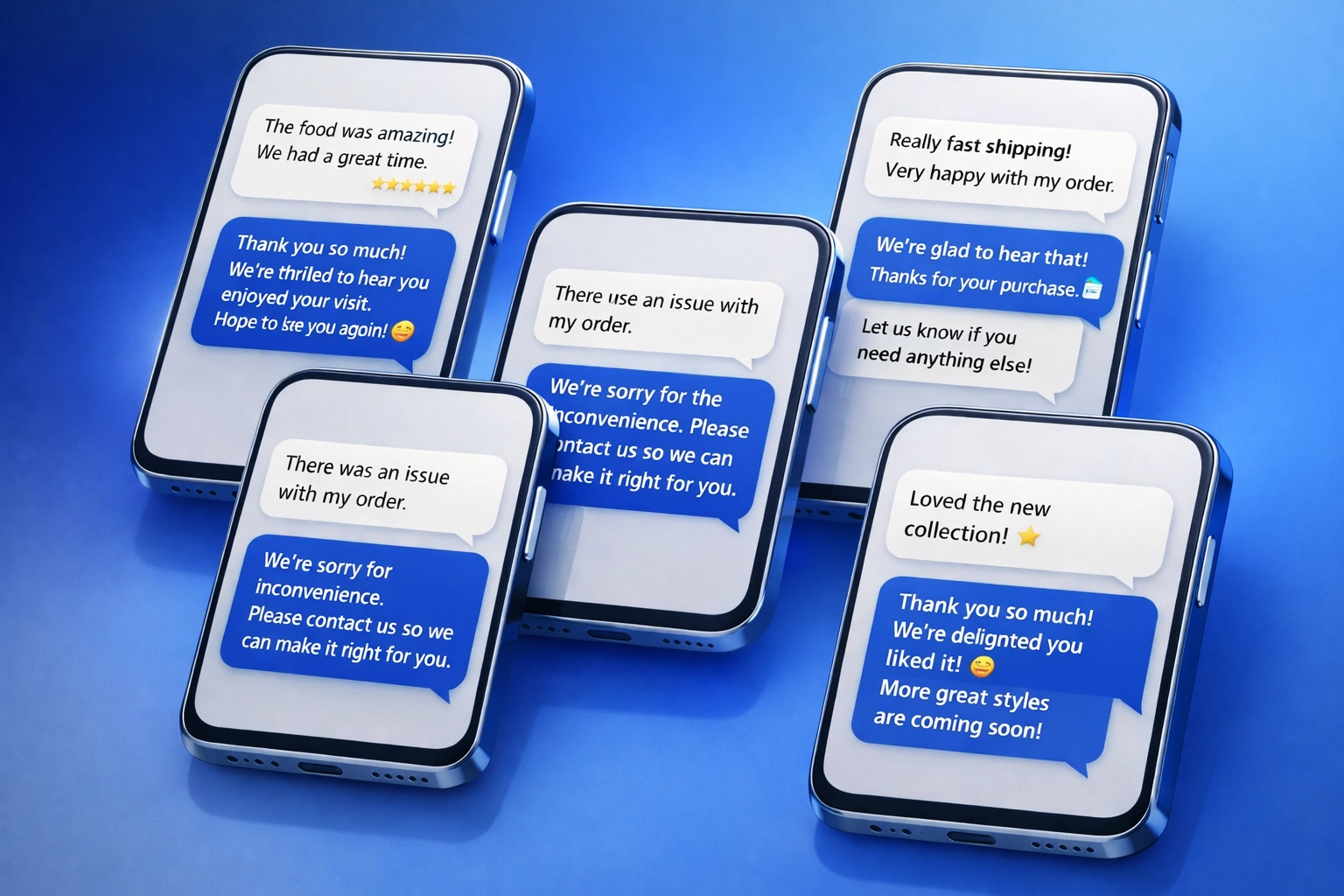
Here's your action plan for the next 30 days:
The shift to compliant, authentic review systems isn't just about avoiding penalties. It's about building a sustainable competitive advantage that compounds over time.
Want to see how we've automated this entire process for businesses in healthcare, auto, hospitality, and retail? Book a demo and I'll show you how CXperks makes review acceleration frictionless, compliant, and scalable.
Or reach out directly: Sales@CXperks.com | 757-606-9100
: Scott T. Janney, CEO, CXperks