Why GRR's Sensory Room Proves Digital Engagement Belongs in Every Waiting Area
June 22, 2026
Learn More




Waiting rooms are the silent killers of customer satisfaction. Your team is doing everything right: providing excellent service, maintaining a clean space, staying on schedule: yet customers still leave frustrated. Here's the thing: the actual wait time isn't always the problem. It's how long that wait feels.
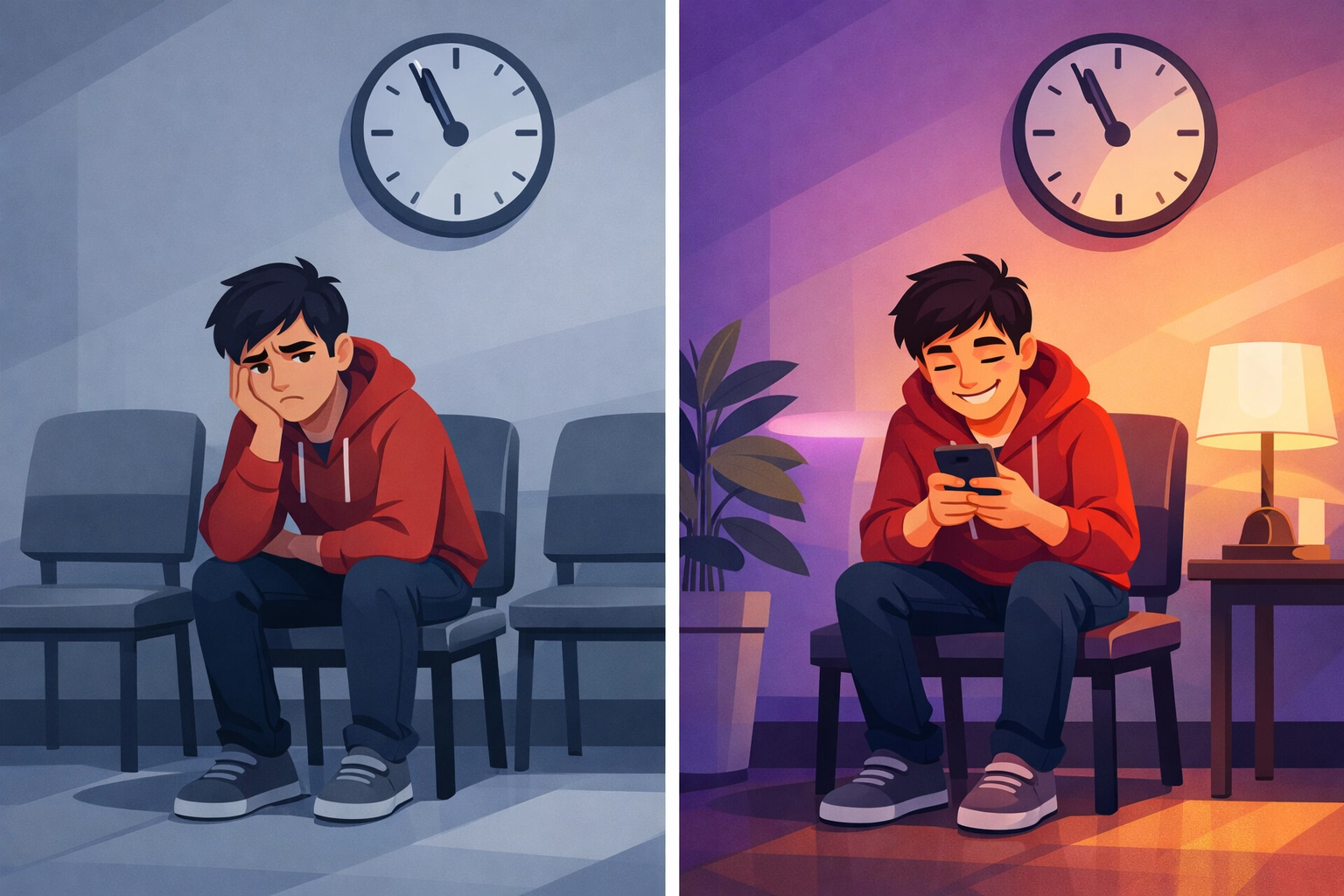
Research consistently shows that occupied time feels shorter than idle time. A 15-minute wait spent staring at the wall feels like an eternity. That same 15 minutes spent engaged with something interesting? It flies by. The most successful businesses in 2026 are discovering that reducing perceived wait time delivers better results than actually speeding up service: and it doesn't require hiring a single new staff member.
Your customers aren't wearing stopwatches. They're experiencing your waiting room through the lens of boredom, anxiety, and uncertainty. A study on customer behavior found that transparent communication about wait times can reduce complaints by up to 40%. But here's what's even more powerful: giving customers something engaging to do during that wait can reduce perceived time by nearly half.

Think about your last flight delay. Thirty minutes scrolling through your phone felt manageable. Thirty minutes with a dead battery and nothing to do felt unbearable. Same duration, completely different experience. That's the power of engagement: and it's exactly what your waiting room needs.
The challenge? Your customers range from 8-year-olds accompanying their parents to 88-year-olds coming in for appointments. One-size-fits-all entertainment doesn't work. Outdated magazines don't cut it. And asking everyone to download an app? That's a non-starter.
The most effective approach to reducing perceived wait time is surprisingly simple: offer interactive content that appeals to your entire customer base. We're talking digital magazines, brain games, puzzles, trivia, and entertainment that customers can access instantly: no apps to download, no accounts to create, no hardware to purchase.
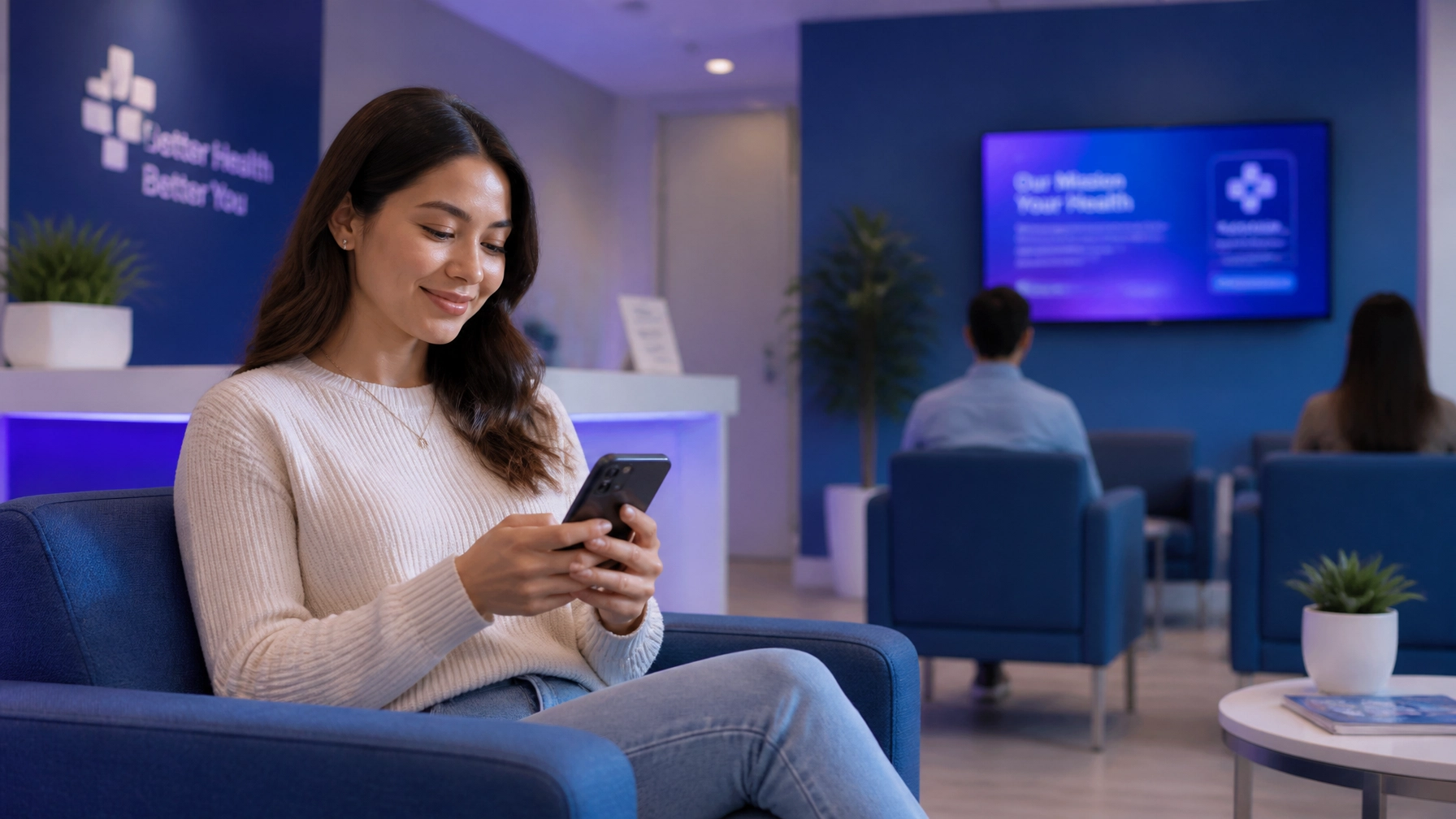
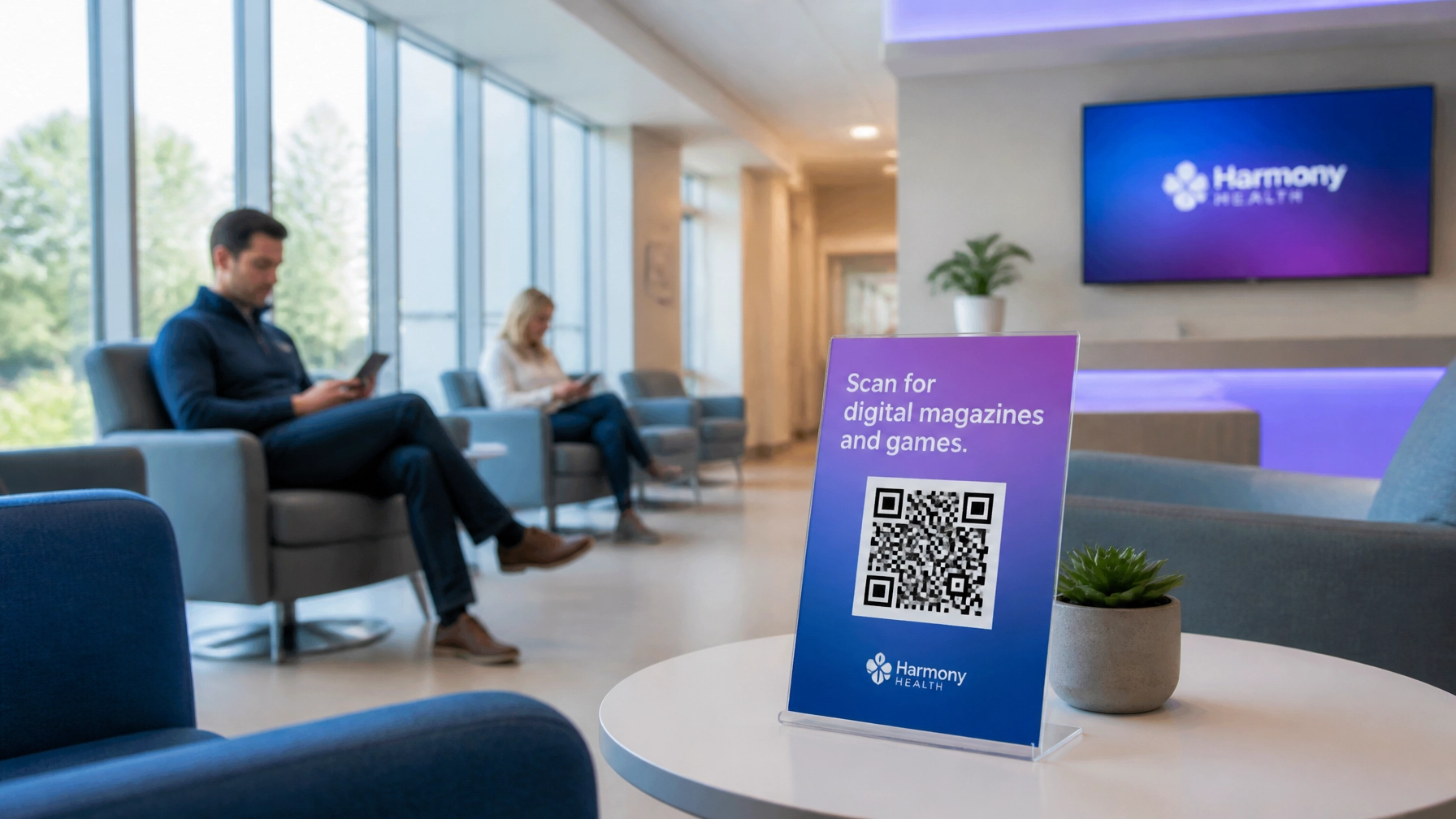
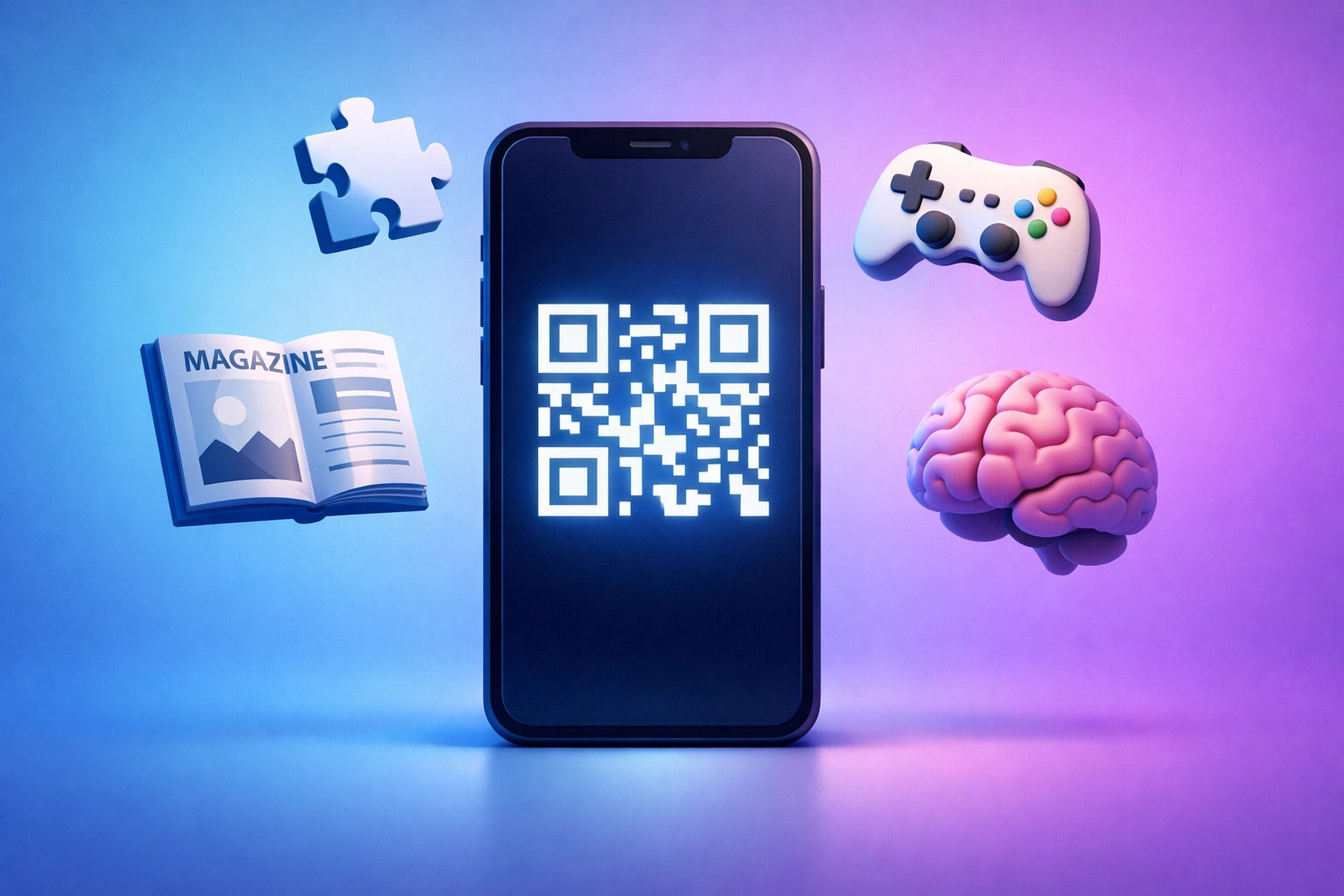
Here's how it works in practice. A customer walks into your waiting room and sees a QR code displayed on a poster or table tent. They scan it with their phone's camera (something 93% of smartphone users already know how to do). Within seconds, they're browsing current magazines, playing Sudoku, testing their knowledge with trivia, or catching up on news: all from their own device.
Why this approach works across generations:
The beauty of this approach is its universality. A grandmother and her teenage grandson can both scan the same QR code and immediately find content that appeals to them. No technical barriers, no generational divides.
One of the biggest mistakes businesses make when trying to improve their waiting room experience is investing in expensive hardware or requiring app downloads. Digital screens mounted on walls cost thousands of dollars, require professional installation, and only serve customers within viewing distance. Tablets chained to tables need constant charging, sanitizing, and replacement when they inevitably break or disappear.
App-based solutions fail for an even simpler reason: friction. Asking a customer to download an app for a 15-minute wait is like asking them to buy a house when they just need a place to sit. Even if your app is fantastic, most customers won't bother. They'll sit there scrolling social media or staring at the ceiling instead.
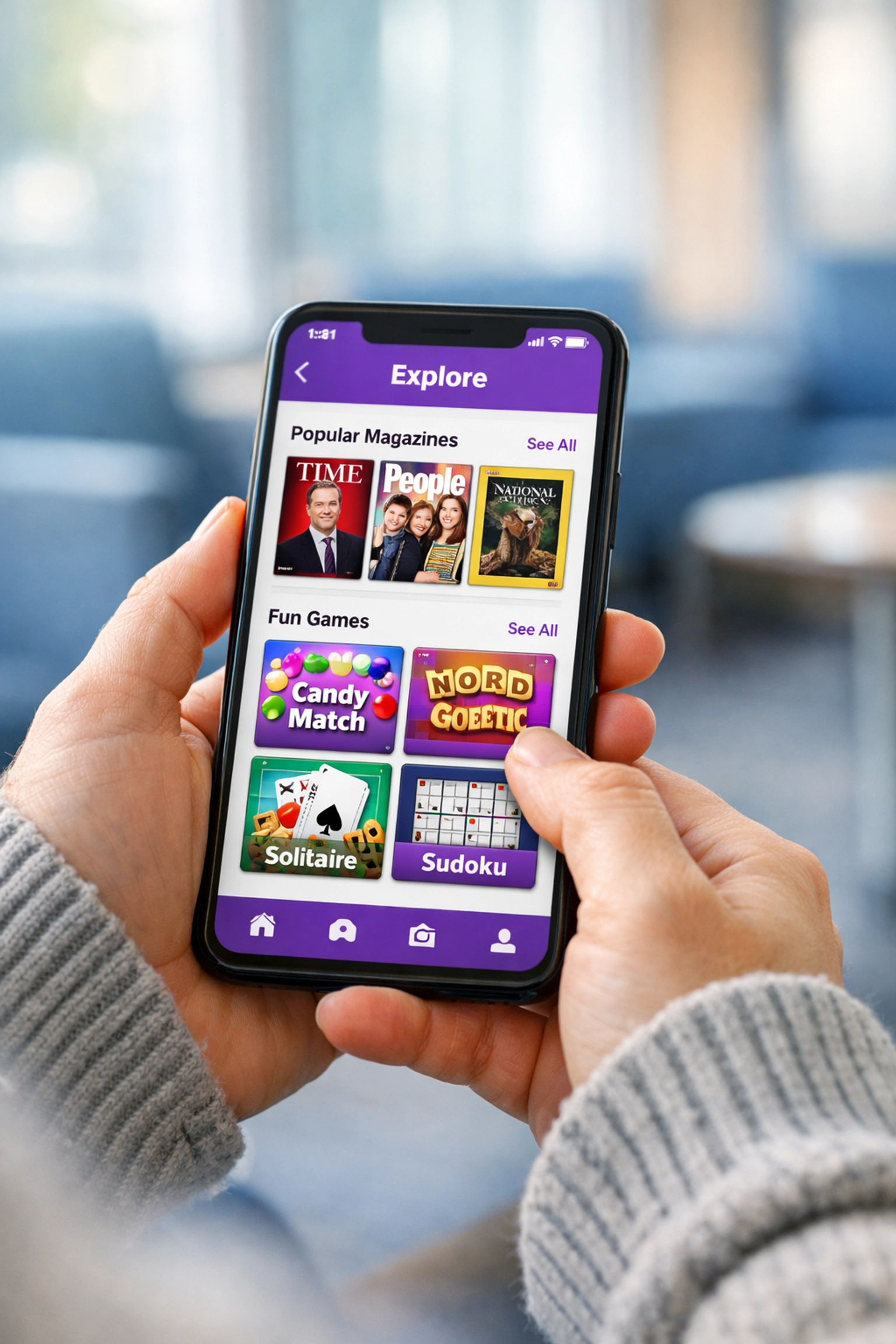
The no-app, no-hardware approach eliminates all these problems. Your customers use their own devices: the phones already in their pockets. You display a simple QR code: printed posters that cost pennies. Updates happen automatically on the backend without any action required from your staff or customers. It's the definition of frictionless entertainment.
While interactive content delivers the biggest impact on perceived wait time, combining it with a few other smart strategies multiplies the results.
Transparent communication sets proper expectations from the start. When customers check in, let them know their expected wait time. Display digital wait time estimates if you have the technology, or simply have your front desk staff communicate it verbally. Research shows that uncertainty is one of the biggest drivers of wait frustration: knowing you have 20 minutes lets you settle in and make the most of that time.
Virtual queuing options let customers wait on their terms. SMS notifications that alert customers when their turn is approaching mean they can step outside for fresh air, sit in their car, or grab a coffee: all while staying in the queue. Studies show this approach reduces no-shows by 40% and decreases perceived wait time by 25%, even though the actual wait duration hasn't changed.
Employee interactions make a measurable difference. The FAST framework: being Friendly, Accurate about wait times, Sympathetic to customer frustration, and Thankful for their patience: costs nothing but transforms the waiting experience. A genuine smile and acknowledgment from staff can shift a customer's entire perception of their visit.
Self-service check-in removes the bottleneck that happens when everyone lines up at the front desk. Digital check-in kiosks or QR code check-in systems reduce check-in time from 30-60 seconds to under 15 seconds per customer. Those seconds compound quickly during busy periods, and customers appreciate the efficiency.
The most powerful insight about perceived wait time is this: you control the experience, not the clock. Your team might need 15 minutes to deliver excellent service to the customer ahead in line. That's fine. What's not fine is leaving your waiting customers with nothing but their thoughts and their phones' home screens.
When you give customers access to premium magazines, engaging games, and quality entertainment during their wait, something remarkable happens. They stop checking the time. They stop sighing audibly. They stop giving your front desk staff frustrated looks. Instead, they're immersed in a crossword puzzle, reading an article they actually care about, or playing a game that challenges their brain.
Parents with restless children experience an entirely different visit. Instead of apologizing for their bored kids bothering other customers, they hand over a phone with a kid-friendly game already loaded. The child is entertained, the parent is relieved, and everyone else in the waiting room is grateful.
Seniors who struggle with modern technology find the experience refreshingly simple. One scan, and they're reading the same magazines they love in large, clear text. No pinching and zooming. No accidentally closing windows. Just straightforward access to familiar content.
Reducing perceived wait time by 47% doesn't require hiring more staff, renovating your space, or investing in expensive technology. It requires understanding a simple truth: engaged customers don't feel like they're waiting.
CXperks delivers exactly this solution: instant access to premium magazines, games, and interactive content that appeals to customers from 8 to 88. No apps to download. No hardware to buy. Just a simple QR code that transforms idle time into engaged time.
The businesses seeing the biggest improvements in customer satisfaction aren't the ones spending more money on staffing or faster service. They're the ones recognizing that perception shapes reality, and a waiting customer with something interesting to do isn't really waiting at all. They're reading, playing, learning, and most importantly: enjoying their visit instead of enduring it.
Your waiting room can become the part of the customer experience that actually enhances satisfaction rather than diminishing it. That transformation starts with giving customers something valuable to do with their time. Everything else follows naturally from there.
Ready to transform your waiting room experience? Book a quick strategy session with our CEO, Scott T. Janney, here.