

Waiting time is not a void that needs to be filled with any distraction available. It is a window when customers are present, unoccupied, and available to notice something useful. Yet many businesses still treat the wait as an inconvenience to endure rather than an asset to put to work.
CXperks describes itself as “the engagement layer for physical locations”. The framework behind that positioning is simple: ENTERTAIN → ENGAGE → INSIGHT. First give customers a reason to pay attention. Then make a useful next step available. Finally, learn what earned attention and what customers chose to do. Explore the framework.
1. ENTERTAIN: Give before you ask
Entertainment comes first because a customer is more likely to notice what follows after the experience has offered something worthwhile. This is the chips-and-salsa moment: a small gesture that makes a wait feel considered before the business asks for anything.
A customer scans a QR code and opens digital magazines, games, and trivia on their own phone. There is no app to download, no login to create, and no personal data required. The content makes the first interaction useful on its own.

Entertainment is not the end goal. It is the entry point. If the content does not have genuine value for the customer, the next stages have little chance of working. The aim is not to make a waiting area feel like an amusement park; it is to give the customer a better way to spend the time already there.
2. ENGAGE: Make the next step useful
Once the experience has earned attention, the same space can make relevant information and actions easier to find. Depending on the business, that might include service information, promotions, a loyalty program, a newsletter sign-up, or a survey.
It can also include an optional, one-tap invitation to leave a Google review. The distinction matters: engagement means offering customers a useful next step, not interrupting them with a pitch. A review invitation must be available to every customer, regardless of their experience or feedback.
Google’s User-Generated Content Policy and guidance on getting more reviews set important boundaries. Any review request must be genuine, optional, and unfiltered:
- No incentives, discounts, gifts, or anything of value in exchange for a review.
- No review gating, sentiment screening, or routing unhappy customers away from Google.
- No guaranteed positive reviews or requests for specific wording or a star rating.
- No pressure to review while on the premises, and no staff-written reviews.
A bare review request can put the ask ahead of the experience. CXperks takes the opposite sequence: offer entertainment first, then make an honest review invitation available without steering the customer’s response. For cafés, laundromats, and car service businesses, including tire shops, that can make the review prompt easier to find without making it the whole experience.
3. INSIGHT: Replace assumptions with measurement
The third stage is one many waiting-area businesses have not had a practical way to access: anonymous, location-level insight into what customers actually engage with.
Instead of relying only on gut feel about a stack of magazines, a TV channel, or a poster, operators can look at signals such as scans, dwell time, content usage, and which actions are tapped. The CXperks solutions framework describes anonymous usage analytics as a way to understand what receives attention across locations and moments.
That measurement can help teams decide what to keep, change, or scale. It can also help multi-location operators compare performance and refine the experience over time.
There is an important limit: these signals show what earns attention and what customers choose to do. By themselves, they do not prove revenue lift. To understand whether engagement contributes to business outcomes, compare the engagement data with your own records over time.
How the framework fits different waiting areas
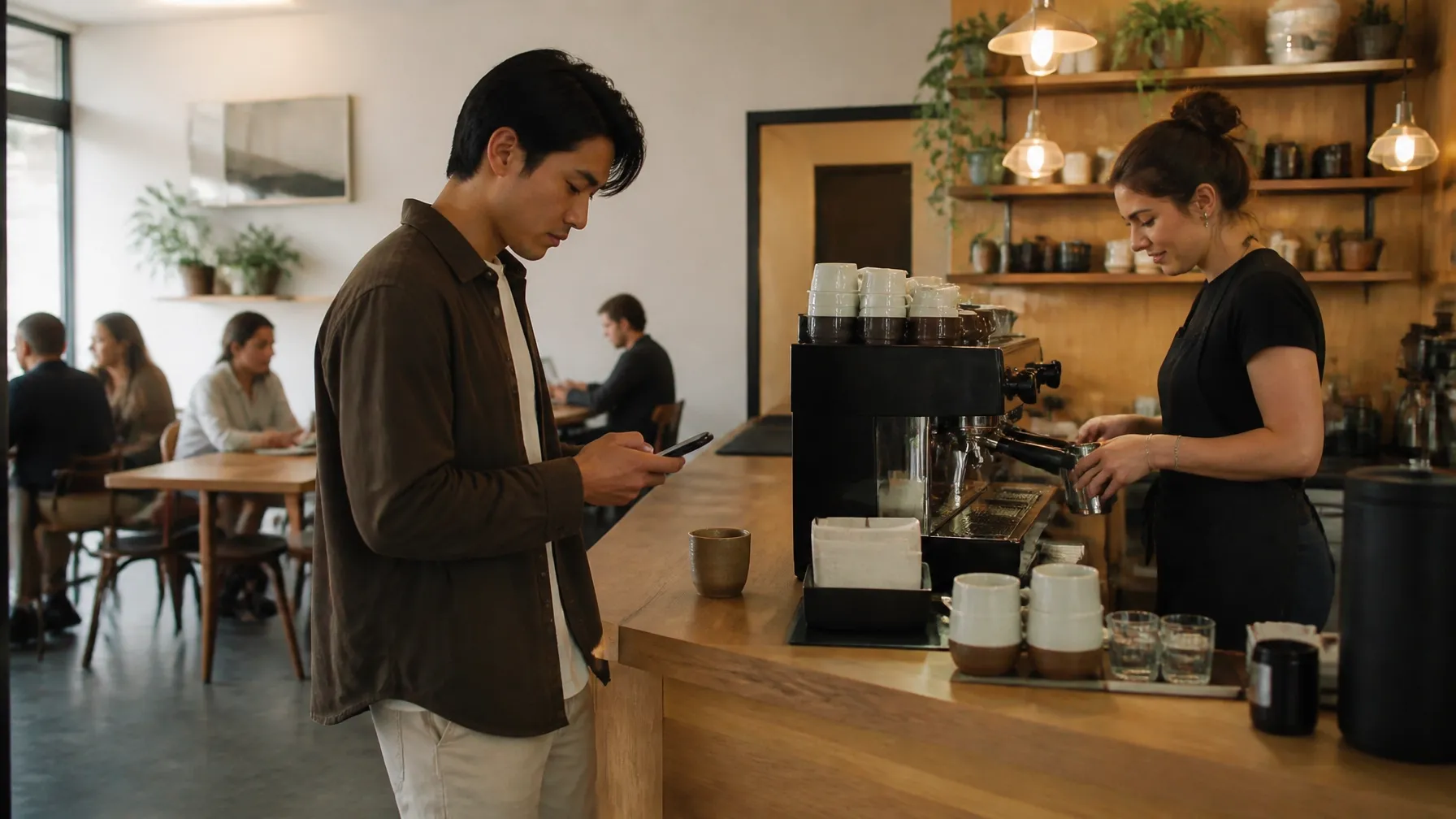
- Café: During a morning rush, a quick scan can surface short-form entertainment or a timely offer while a drink is prepared. The operator can then review which content and actions attract attention during busy periods.
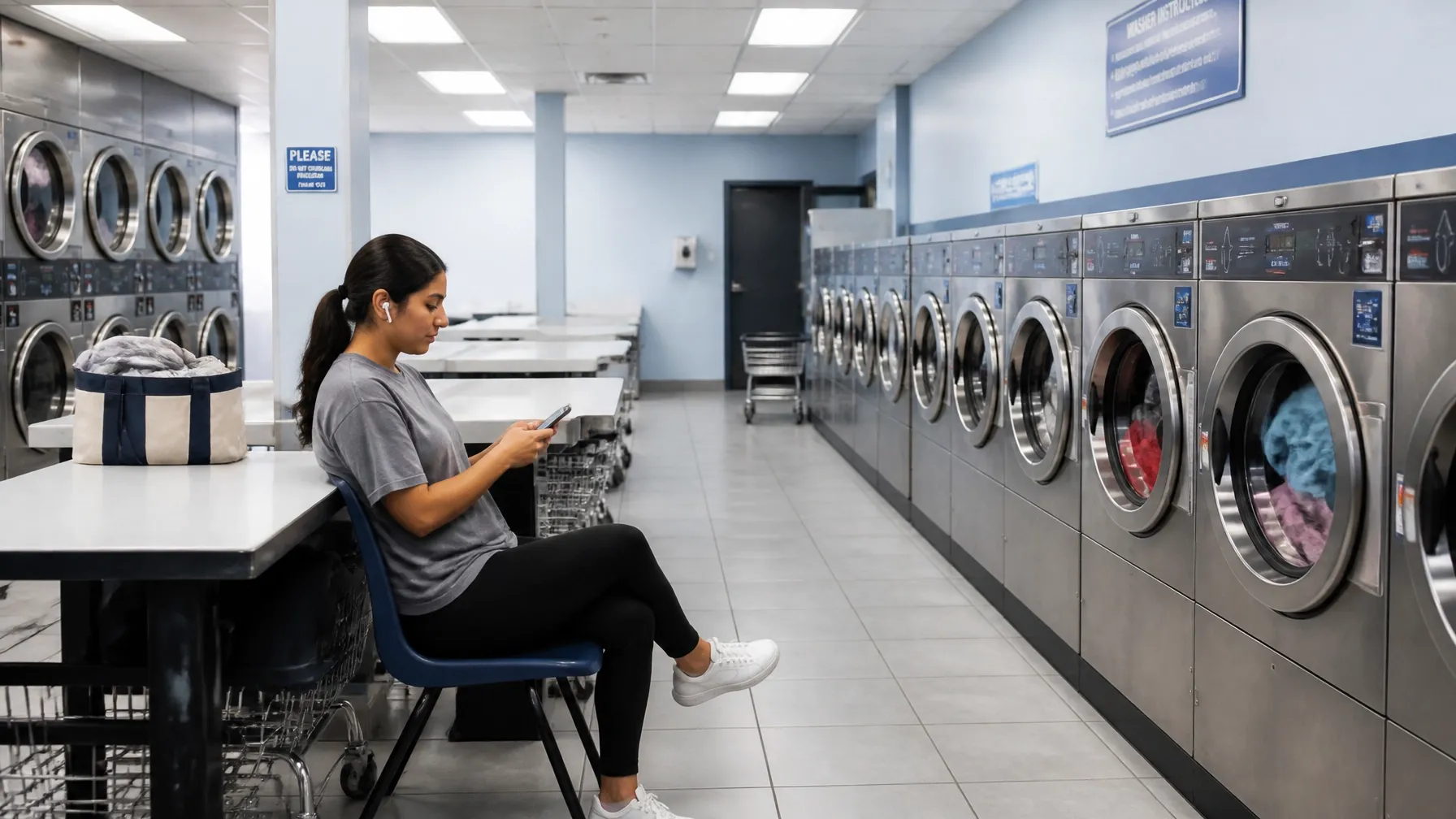
- Laundromat: A longer visit gives customers time to explore magazines, games, or trivia, alongside relevant services and loyalty information. Over time, location-level engagement can help a laundromat understand what its regular visitors choose to use.
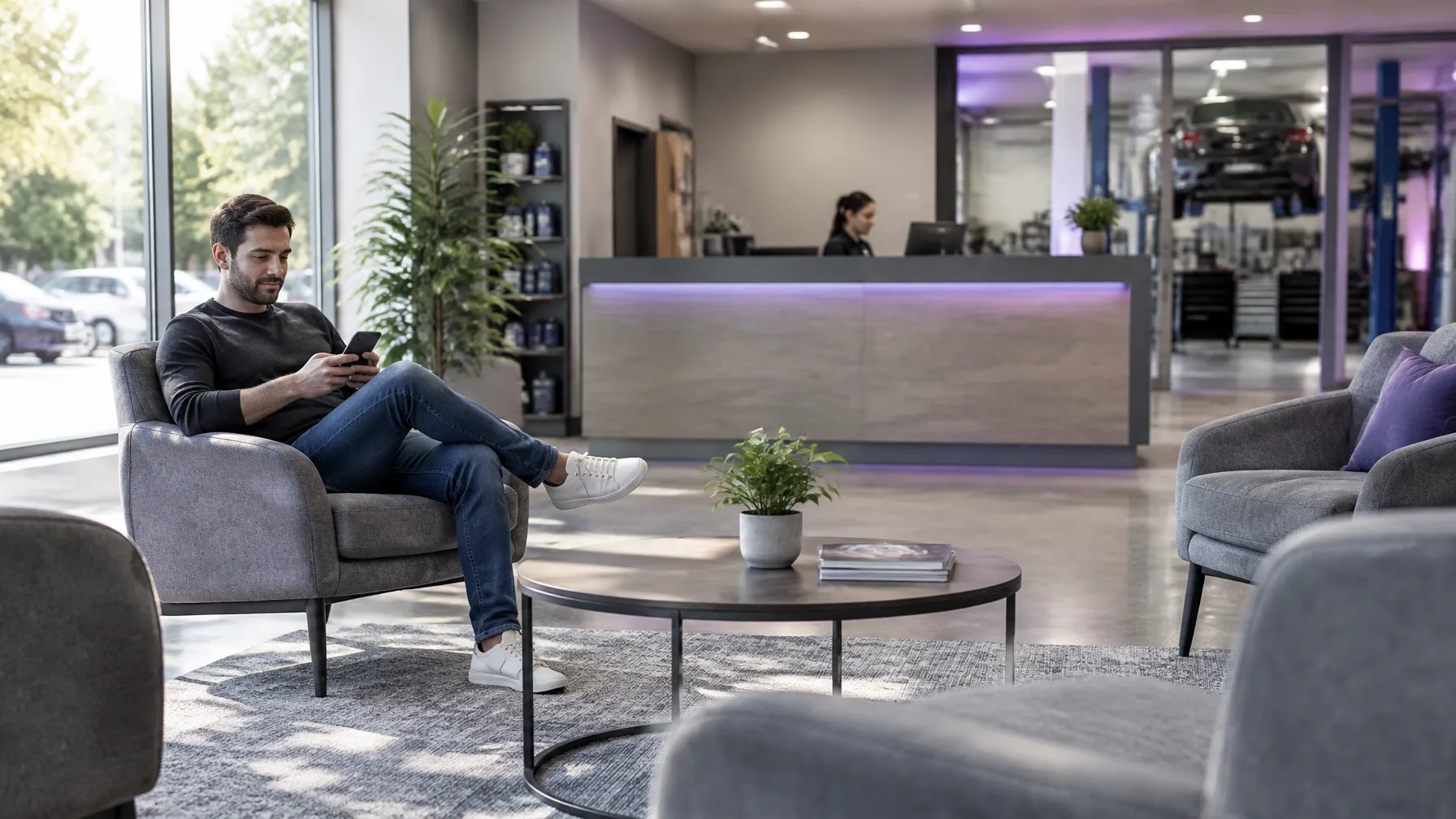
- Auto service lounge: While a vehicle is being serviced, customers can access entertainment and useful service information on their own phones. Once the visit is complete, an optional, unfiltered review invitation can make it easy to share honest feedback.
- Clinic waiting room: A calm, privacy-first experience can offer general digital content without asking patients to log in or provide clinical information.
- Salon: Customers waiting for an appointment can browse content and find relevant services or offers without an interruption from staff.
Why the order matters
Entertainment comes before engagement because attention is more likely to follow an experience that gives before it asks. Skip that first stage, and the interaction may be reduced to a sign taped to the counter or a bare review request. The customer sees the ask, but receives no reason to engage with anything else.
Engagement comes before insight because measurement matters when there is something meaningful to measure. Once customers have a useful experience and clear next steps, operators can learn what they choose to explore. Without those opportunities, the data has little to say beyond whether a scan happened.
Together, the stages create a practical loop: offer something worthwhile, make relevant actions available, then use the resulting signals to improve the experience. They are connected parts of one operating model, not three unrelated products.
Turn waiting into a deliberate part of the experience
As businesses adapt to customers’ expectation of convenient, mobile-first interactions, waiting areas are easy to overlook. Yet the wait is already part of the visit, whether the business actively manages it or not.
An unmanaged wait is friction. A managed wait can become an asset: a chance to welcome customers, connect them with useful next steps, and learn what earns their attention. ENTERTAIN → ENGAGE → INSIGHT is how CXperks helps businesses put that sequence into practice.
If you’re deciding where to invest attention and budget, at one location or across many, book a conversation with Scott T. Janney to discuss how the framework could fit your business.